While niche-based processes have been invoked extensively to explain the structure of interaction networks, recent studies propose that neutrality could also be of great importance. Under the neutral hypothesis, network structure would simply emerge from random encounters between individuals and thus would be directly linked to species abundance.
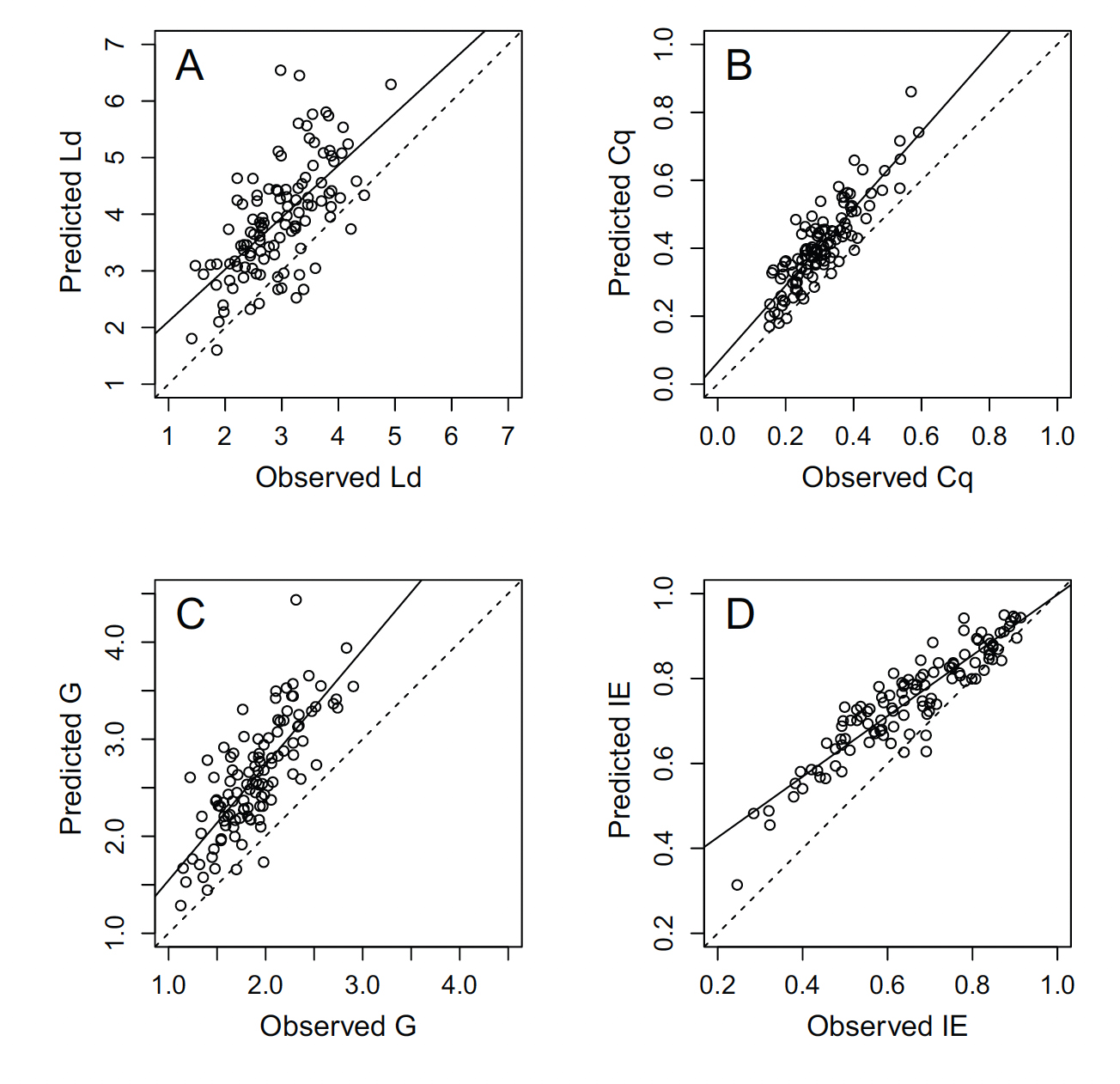
We investigated the impact of species abundance distributions on qualitative and quantitative metrics of 113 host-parasite networks. We analyzed the concordance between neutral expectations and empirical observations at interaction, species, and network levels. We found that species abundance accurately predicts network metrics at all levels.
Despite host-parasite systems being constrained by physiology and immunology, our results suggest that neutrality could also explain, at least partially, their structure. We hypothesize that trait matching would determine potential interactions between species, while abundance would determine their realization.