How Coexistence Mechanisms Shape the BEF
Poisot T., Mouquet N., Gravel D. (2013). Trophic complementarity drives the biodiversity-ecosystem functioning relationship in food webs. Ecology Letters, doi.org/10.1111/ele.12118
Matias M.G., Combe M., Barbera C., Mouquet N. (2013). Ecological strategies shape the insurance potential of biodiversity. Frontiers in Microbiology, doi.org/10.3389/fmicb.2012.00432
Bouvier T., Venail P., Pommier T., Bouvier C., Barbera C., Mouquet N. (2012). Contrasted Effects of Diversity and Immigration on Ecological Insurance in Marine Bacterioplankton Communities. PLoS ONE, doi.org/10.1371/journal.pone.0037620
Mouillot D., Mouquet N. (2006). Species richness peaks for intermediate levels of biomass in a fractal succession with quasi-neutral interactions. Oikos, doi.org/10.1111/j.2006.0030-1299.14894.x
Mouquet N., Leadley P., M'eriguet J., Loreau M. (2004). Immigration and local competition in herbaceous plant communities: a three-year seed-sowing experiment. Oikos, doi.org/10.1111/j.0030-1299.2004.12644.x
Mouquet N., Moore J.L., Loreau M. (2002). Plant species richness and community productivity: why the mechanism that promotes coexistence matters. Ecology Letters, doi.org/10.1046/j.1461-0248.2002.00281.x
Moore J.L., Mouquet N., Lawton J.H., Loreau M. (2001). Coexistence, saturation and invasion resistance in simulated plant assemblages. Oikos, doi.org/10.1034/j.1600-0706.2001.940211.x
Evolving the BEF
Aubree F., David P., Jarne P., Loreau M., Mouquet N., Calcagno V. (2020). How community adaptation affects biodiversity-ecosystem functioning relationships. Ecology Letters, doi.org/10.1111/ele.13530
Calcagno V., Jarne P., Loreau M., Mouquet N., David P. (2017). Diversity spurs diversification in ecological communities. Nature Communications, doi.org/10.1038/ncomms15810
Jousset A., Eisenhauer N., Merker M., Mouquet N., Scheu S. (2016). High functional diversity stimulates diversification in experimental microbial communities. Science Advances, doi.org/10.1126/sciadv.1600124
Gravel D.*, Bell T., Barbera C., Combe M., Pommier T., Mouquet N.* (2012). Phylogenetic constraints on ecosystem functioning. Nature Communications, doi.org/10.1038/ncomms2123 (* These authors contributed equally to this study)
Gravel D., Bell T., Barbera C., Bouvier T., Pommier T., Venail P., Mouquet N. (2010). Experimental niche evolution alters the strength of the diversity-productivity relationship. Nature, doi.org/10.1038/nature09592
Venail P., MacLean R.C., Meynard C.N., Mouquet N. (2010). Dispersal scales up the biodiversity-productivity relationship in an experimental source-sink metacommunity. Proceedings of the Royal Society B Biological Sciences, doi.org/10.1098/rspb.2009.2104
Venail P., MacLean R.C., Bouvier T., Brockhurst M.A., Hochberg M., Mouquet N. (2008). Diversity and productivity peak at intermediate dispersal rate in evolving metacommunities. Nature, doi.org/10.1038/nature06554
Scaling Up the BEF
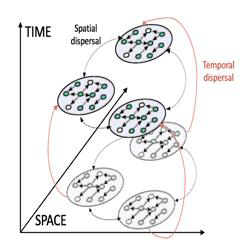
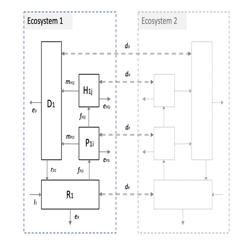
Mouquet N., Mahaut L., Thuiller W., Auber A., Casajus C., Enquist B.J., Gauzere P., Loiseau N., Mouillot D., Munoz F., Villeger S. and Violle C. (2025). Spatial Insurance of Distinct Ecological Functions. Ecology Letters, 2025; 28:e70266, doi.org/10.1111/ele.70266
Brun P., Violle C., Mouillot D., Mouquet N., Enquist B.J., Munoz F., Munkemuller T., Ostling A., Zimmermann N.E., Thuiller W. (2022). Plant community impact on productivity: Trait diversity or key(stone) species effects?. Ecology Letters, doi.org/10.1111/ele.13968
Delalandre L., Gauzere P., Thuiller W., Cadotte M.W., Mouquet N., Mouillot D., Munoz F., Denelle P., Loiseau N., Morin X., Violle C. (2022). Functionally distinct tree species support long-term productivity in extreme environments. Proceedings of the Royal Society B Biological Sciences, doi.org/10.1098/rspb.2021.1694
Venail P.A., MacLean R.C., Meynard C.N. and Mouquet N. (2010). Dispersal scales up the biodiversity productivity relationship in an experimental source-sink metacommunity. Proceedings of the Royal Society B, 277, 2339-2345, doi:10.1098/rspb.2009.2104
Loreau M., Mouquet N., Gonzalez A. (2003). Biodiversity as spatial insurance in heterogeneous landscapes. Proceedings of the National Academy of Sciences, doi.org/10.1073/pnas.2235465100