Ecology · Biodiversity · CNRS

Nicolas Mouquet

Senior research scientist at CNRS, based at MARBEC and the University of Montpellier. Research on biodiversity at the interface of biogeography, ecosystem functioning, and human nature relationship.

Research overview

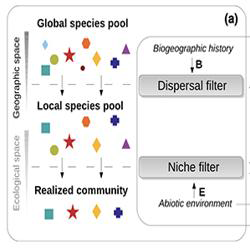
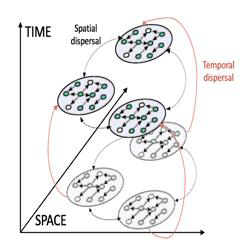
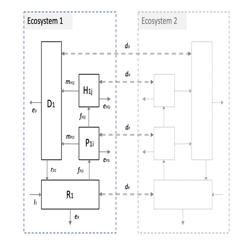
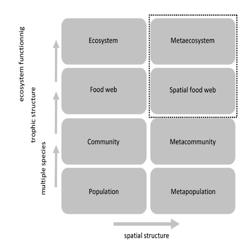
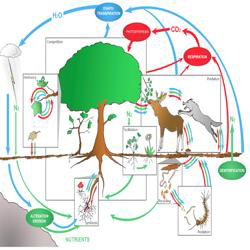
I am primarily a theoretical community ecologist, with complementary experience in biodiversity, ecosystem functioning and evolution. Early in my career, I developed among the first models of metacommunities, showing how dispersal among local communities shapes diversity at local and regional scales. These models contributed to the formalisation of metacommunity theory. I extended this approach by integrating metaecosystem dynamics and eco-evolutionary processes, combining theoretical models with experimental microbial systems, and worked on trophic biogeography and ecophylogenetics to understand how coexistence mechanisms, spatial dynamics and evolutionary history structure biodiversity.

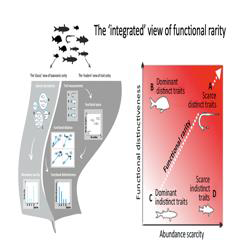
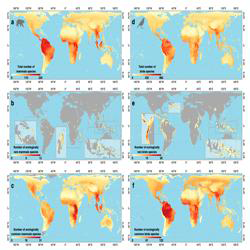
My research has progressively scaled up towards macroecology and biogeography, with the objective of mapping the multiple facets of biodiversity (taxonomic, functional and phylogenetic) and understanding how environmental, historical and anthropogenic factors generate observed biogeographic patterns. Within the framework of functional biogeography I studied how ecological functions are distributed across regions and ecosystems, identifying patterns of functional diversity, redundancy and vulnerability under global change. A central thread of this work is the concept of functional rarity, which identifies species that are both ecologically rare and functionally distinct, and therefore likely to play disproportionate roles in ecosystem functioning and conservation. These studies cover both marine (tropical coral reefs & mediterranean coralligenous) and terrestrial ecosystems (birds, mammals, and plants).

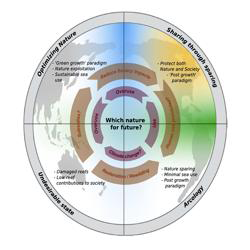
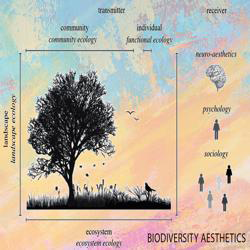
I am now working within the broader framework of Nature’s Contributions to People and the Nature Futures Framework (IPBES), to integrate the ecological sciences with the social and cultural dimensions of biodiversity. In particular, I develop a quantitative measure of biodiversity aesthetic, combining online participatory surveys (Biodiful), image analysis and deep learning to quantify the aesthetic value of species and communities at the local and biogeographic scales. I am increasingly interested in how our representations of nature shape the ways we relate to, and protect biodiversity.

Along the way, I have contributed to several reviews and conceptual syntheses and curate the Global Ecology feed on Bluesky (see also the online digest).

I am fortunate to work with incredible students, postdocs, collaborators and colleagues, many of whom have taught me more than I could ever hope to learn.
Research themes
Outreach

Sharing our work with the broader public is an essential extension of the science itself, and I place real importance on transdisciplinary engagement. The themes I work on, biodiversity, the aesthetics of life, species vulnerability, the human–nature relationship, draw real media interest, and I try to meet that visibility with interventions that are pedagogical, rigorous and accessible.

I have been fortunate to see my work covered in French and international newspapers, magazines and on radio. I am also increasingly drawn to the dialogue between science and art, as another way of opening biodiversity to a wider audience.

Here to know more ...

Outreach activities
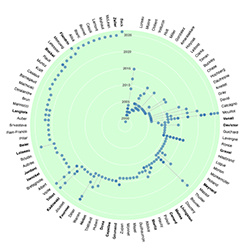
© Aré, after our article Langlois et al. 2022.
Publications

Doing science is about working together. Here is a list of the publications I have contributed to since 1999. Thanks to all the lead authors and co-authors for this wonderful journey.

  1. [136]
    Citation self-awareness for a fairer academic publishing landscape.

    Beck M., Annasawmy P., Birre D., Busana M., Casajus N., Coux C., Marino C., Mouquet N., Nicvert L., Oliveira B.F., Petit-Cailleux C., Tortosa A., Unkule M., Vagnon C., Veytia D. (2026). Citation self-awareness for a fairer academic publishing landscape. BioScience, doi.org/10.1093/biosci/biag028 (*All authors contributed equally to this study)

  2. [135]
    Marine protected areas marginally offset anthropogenic declines in tropical reef fish contributions to nature and people.

    Flandrin U., Mouquet N., Loiseau N., Hautecoeur C., Maire E., McLean M., Sanchez L., Clausius E., Stuart-Smith R., Edgar G., Albouy C., Cinner J.E., Mouillot D. (2026). Marine protected areas marginally offset anthropogenic declines in tropical reef fish contributions to nature and people. Nature Ecology & Evolution, doi.org/10.1038/s41559-026-03008-2

  3. [134]
    Spatial Insurance of Distinct Ecological Functions.

    Mouquet N., Mahaut L., Thuiller W., Auber A., Casajus N., Enquist B.J., Gauzère P., Loiseau N., Mouillot D., Munoz F., Villeger S., Violle C. (2025). Spatial Insurance of Distinct Ecological Functions. Ecology Letters, doi.org/10.1111/ele.70266

  4. [133]
    The science of cuteness: where teddy bears' beauty, comfort and care converge.

    Blanc N., Tribot A., Brassac T., Mouquet N. (2025). The science of cuteness: where teddy bears' beauty, comfort and care converge. The Journal of Positive Psychology, doi.org/10.1080/17439760.2025.2538890

  5. [132]
    Too cute to be wild: what teddy bears reveal about our disconnection from nature.

    Mouquet N., Blanc N., Brassac T., Casajus N., Tribot A. (2025). Too cute to be wild: what teddy bears reveal about our disconnection from nature. BioScience, doi.org/10.1093/biosci/biaf146

  6. [131]
    Benthic communities on restored coral reefs confer equivalent aesthetic value to healthy reefs.

    Alisa C.A.G., Razak T.B., Mouquet N., Graham N.A.J., Hemingson C.R., Mouillot D., team M.C.R.P.m., Damayanti L., Prasetya M.E., Maulana P.B., Hamka A., Dwiyanto A., Abeng A.T., Irwan, Madjid R., Hidayat E.A., Lakota H., Parrangan C.V., Pratama A.M., Hamzah, Suandar, Subhan B., Zamani N.P., Vida R.T., Lamont T.A.C. (2025). Benthic communities on restored coral reefs confer equivalent aesthetic value to healthy reefs. Scientific Reports, doi.org/10.1038/s41598-025-06373-3

  7. [130]
    Conserving the beauty of the world's reef fish assemblages.

    McLean M.*, Mouillot D., Langlois J., Arif S., Bejarano S., Casajus N., Edgar G.J., Flandrin U., Guilhaumon F., Judah A.B., Loiseau N., MacNeil M.A., Maire E., Stuart-Smith R.D., Mouquet N*. (2025). Conserving the beauty of the world's reef fish assemblages. Proceedings of the National Academy of Sciences, doi.org/10.1073/pnas.2415931122 (*These authors contributed equally to this study)

  8. [129]
    Assessing the ecological and aesthetic effectiveness of restoration interventions on coralligenous reefs.

    Casoli E., Raschetti S., Mouquet N., Ventura D., Mancini G., Penna M., Belluscio A., Ardizzone G. (2025). Assessing the ecological and aesthetic effectiveness of restoration interventions on coralligenous reefs. Restoration Ecology, doi.org/10.1111/rec.70092

  9. [128]
    Functional diversity shapes the stability of reef fish biomass under global change.

    Mahaut L., Loiseau N., Villeger S., Auber A., Hautecoeur C., Maire A., Mellin C., Mouquet N., Stuart-Smith R.D., Violle C., Mouillot D. (2025). Functional diversity shapes the stability of reef fish biomass under global change. Proceedings of the Royal Society B Biological Sciences, doi.org/10.1098/rspb.2025.0252

  10. [127]
    Danger versus fear: A key to understanding biophobia.

    Zeller K., Mouquet N., Garcia C., Dezecache G., Maille A., Duboscq J., Morino L., Bonnet X. (2025). Danger versus fear: A key to understanding biophobia. People and Nature, doi.org/10.1002/pan3.70009

  11. [126]
    Fish communities can simultaneously contribute to nature and people across the world's tropical reefs.

    Flandrin U., Mouillot D., Albouy C., Bejarano S., Casajus N., Cinner J.E., Edgar G.J., Ghilardi M., Leprieur F., Loiseau N., MacNeil A., Maire E., McLean M., Parravicini V., Pellissier L., Schiettekatte N.M.D., Stuart-Smith R.D., Villeger S., Mouquet N. (2024). Fish communities can simultaneously contribute to nature and people across the world's tropical reefs. One Earth, doi.org/10.1016/j.oneear.2024.09.011

  12. [125]
    The socioeconomic and environmental niche of protected areas reveals global conservation gaps and opportunities.

    Mouillot D., Velez L., Albouy C., Casajus N., Claudet J., Delbar V., Devillers R., Letessier T.B., Loiseau N., Manel S., Mannocci L., Meeuwig J.J., Mouquet N., Nuno A., O'Connor L., Parravicini V., Renaud J., Seguin R., Troussellier M., Thuiller W. (2024). The socioeconomic and environmental niche of protected areas reveals global conservation gaps and opportunities. Nature Communications, doi.org/10.1038/s41467-024-53241-1

  13. [124]
    Inferring the extinction risk of marine fish to inform global conservation priorities.

    Loiseau N., Mouillot D., Velez L., Seguin R., Casajus N., Coux C., Albouy C., Claverie T., Duhamet A., Fleure V., Langlois J., Villeger S., Mouquet N. (2024). Inferring the extinction risk of marine fish to inform global conservation priorities. PLoS Biology, doi.org/10.1371/journal.pbio.3002773

  14. [123]
    Low human interest for the most at-risk reef fishes worldwide.

    Mouquet N., Langlois J., Casajus N., Auber A., Flandrin U., Guilhaumon F., Loiseau N., McLean M., Receveur A., Stuart-Smith R.D., Mouillot D. (2024). Low human interest for the most at-risk reef fishes worldwide. Science Advances, doi.org/10.1126/sciadv.adj9510

  15. [122]
    Divergent responses of pelagic and benthic fish body-size structure to remoteness and protection from humans.

    Letessier T.B., Mouillot D., Mannocci L., Christ H.J., Elamin E.M., Elamin S.M., Friedlander A.M., Hearn A., Juhel J., Kleiven A.R., Moland E., Mouquet N., Kleiven P.J.N., Sala E., Thompson C.D.H., Velez L., Vigliola L., Meeuwig J.J. (2024). Divergent responses of pelagic and benthic fish body-size structure to remoteness and protection from humans. Science, doi.org/10.1126/science.adi7562

  16. [121]
  17. [120]
    Early signals of Posidonia oceanica meadows recovery in a context of wastewater treatment improvements.

    Bockel T., Marre G., Delaruelle G., Agel N., Boissery P., Guilhaumon F., Mouquet N., Mouillot D., Guilbert A., Deter J. (2024). Early signals of Posidonia oceanica meadows recovery in a context of wastewater treatment improvements. Marine Pollution Bulletin, doi.org/10.1016/j.marpolbul.2024.116193

  18. [119]
    chessboard: An R package for creating networkconnections based on chess moves.

    Casajus N., Borges E.R., Tabacchi E., Fried G., Mouquet N. (2023). chessboard: An R package for creating networkconnections based on chess moves. The Journal of Open Source Software, doi.org/10.21105/joss.05753

  19. [118]
    Anchoring pressure and the effectiveness of new management measures quantified using AIS data and a mobile application.

    Bockel T., Marre G., Delaruelle G., Holon F., Boissery P., Blandin A., Mouquet N., Deter J. (2023). Anchoring pressure and the effectiveness of new management measures quantified using AIS data and a mobile application. Marine Pollution Bulletin, doi.org/10.1016/j.marpolbul.2023.115511

  20. [117]
    Trait-environment associations diverge between native and alien breeding bird assemblages on the world's oceanic islands.

    Rault C., Leprieur F., Barbaro L., Kreft H., Mouquet N., Papaix J., Sekercioglu C.H., Violle C., Barnagaud J. (2023). Trait-environment associations diverge between native and alien breeding bird assemblages on the world's oceanic islands. Global Ecology and Biogeography, doi.org/10.1111/geb.13729

  21. [116]
    The ecological causes of functional distinctiveness in communities.

    Munoz F., Klausmeier C.A., Gauzere P., Kandlikar G.S., Litchman E., Mouquet N., Ostling A., Thuiller W., Algar A.C., Auber A., Cadotte M.W., Delalandre L., Denelle P., Enquist B.J., Fortunel C., Grenie M., Loiseau N., Mahaut L., Maire A., Mouillot D., Pimiento C., Violle C., Kraft N.J.B. (2023). The ecological causes of functional distinctiveness in communities. Ecology Letters, doi.org/10.1111/ele.14265

  22. [115]
  23. [114]
    Artificial Intelligence and Social Networks Can Help to Protect the Famous Dugong

    Mannocci L, Carcaillet F, Chaumont M, Givord-Coupeau B, Iovan C, Mouquet N , Raffard E, Ravera J, Peyre Y, Ponce A, Vigliola L, Villon S and Mouillot D (2022) Artificial Intelligence and Social Networks Can Help to Protect the Famous Dugong Front. Young Minds. 10:828597. doi: 10.3389/frym.2022.828597

  24. [113]
    A functional vulnerability framework for biodiversity conservation.

    Auber A., Waldock C., Maire A., Goberville E., Albouy C., Algar A.C., McLean M., Brind'Amour A., Green A.L., Tupper M., Vigliola L., Kaschner K., Kesner-Reyes K., Beger M., Tjiputra J., Toussaint A., Violle C., Mouquet N., Thuiller W., Mouillot D. (2022). A functional vulnerability framework for biodiversity conservation. Nature Communications, doi.org/10.1038/s41467-022-32331-y

  25. [112]
    Mitigation Strategies to Improve Reproducibility of Poverty Estimations From Remote Sensing Images Using Deep Learning.

    Machicao J., Abbes A.B., Meneguzzi L., Correa P.L.P., Specht A., David R., Subsol G., Vellenich D.F., Devillers R., Stall S., Mouquet N., Chaumont M., Berti-Equille L., Mouillot D. (2022). Mitigation Strategies to Improve Reproducibility of Poverty Estimations From Remote Sensing Images Using Deep Learning. Earth and Space Science, doi.org/10.1029/2022EA002379

  26. [111]
    The aesthetic value of reef fishes is globally mismatched to their conservation priorities.

    Langlois J.*, Guilhaumon F., Baletaud F., Casajus N., Braga C.D.A., Fleure V., Kulbicki M., Loiseau N., Mouillot D., Renoult J.P., Stahl A., Stuart-Smith R.D., Tribot A., Mouquet N.* (2022). The aesthetic value of reef fishes is globally mismatched to their conservation priorities. PLoS Biology, doi.org/10.1371/journal.pbio.3001640 (*These authors contributed equally to this study)

  27. [110]
    Plant community impact on productivity: Trait diversity or key(stone) species effects?.

    Brun P., Violle C., Mouillot D., Mouquet N., Enquist B.J., Munoz F., Munkemuller T., Ostling A., Zimmermann N.E., Thuiller W. (2022). Plant community impact on productivity: Trait diversity or key(stone) species effects?. Ecology Letters, doi.org/10.1111/ele.13968

  28. [109]
    Functionally distinct tree species support long-term productivity in extreme environments.

    Delalandre L., Gauzere P., Thuiller W., Cadotte M.W., Mouquet N., Mouillot D., Munoz F., Denelle P., Loiseau N., Morin X., Violle C. (2022). Functionally distinct tree species support long-term productivity in extreme environments. Proceedings of the Royal Society B Biological Sciences, doi.org/10.1098/rspb.2021.1694

  29. [108]
    Niche breadth affects bacterial transcription patterns along a salinity gradient.

    Rain-Franco A., Mouquet N., Gougat-Barbera C., Bouvier T., Beier S. (2021). Niche breadth affects bacterial transcription patterns along a salinity gradient. Molecular Ecology, doi.org/10.1111/mec.16316

  30. [107]
    Maintaining momentum for collaborative working groups in a post-pandemic world.

    Srivastava D.S., Winter M., Gross L.J., Metzger J.P., Baron J.S., Mouquet N., Meagher T.R., Halpern B.S., Pillar V.D. (2021). Maintaining momentum for collaborative working groups in a post-pandemic world. Nature Ecology & Evolution, doi.org/10.1038/s41559-021-01521-0

  31. [106]
    Leveraging social media and deep learning to detect rare megafauna in video surveys.

    Mannocci L., Villon S., Chaumont M., Guellati N., Mouquet N., Iovan C., Vigliola L., Mouillot D. (2021). Leveraging social media and deep learning to detect rare megafauna in video surveys. Conservation Biology, doi.org/10.1111/cobi.13798

  32. [105]
    An integrated approach to estimate aesthetic and ecological values of coralligenous reefs.

    Langlois J., Guilhaumon F., Bockel T., Boissery P., Braga C.D.A., Deter J., Holon F., Marre G., Tribot A., Mouquet N. (2021). An integrated approach to estimate aesthetic and ecological values of coralligenous reefs. Ecological Indicators, doi.org/10.1016/j.ecolind.2021.107935

  33. [104]
    The dimensionality and structure of species trait spaces.

    Mouillot D., Loiseau N., Grenie M., Algar A.C., Allegra M., Cadotte M.W., Casajus N., Denelle P., Gueguen M., Maire A., Maitner B., McGill B.J., McLean M., Mouquet N., Munoz F., Thuiller W., Villeger S., Violle C., Auber A. (2021). The dimensionality and structure of species trait spaces. Ecology Letters, doi.org/10.1111/ele.13778

  34. [103]
    Global distribution and conservation status of ecologically rare mammal and bird species.

    Loiseau N.*, Mouquet N.*, Casajus N., Grenie M., Gueguen M., Maitner B., Mouillot D., Ostling A., Renaud J., Tucker C.M., Velez L., Thuiller W., Violle C. (2020). Global distribution and conservation status of ecologically rare mammal and bird species. Nature Communications, doi.org/10.1038/s41467-020-18779-w (* These authors contributed equally to this work)

  35. [102]
    How community adaptation affects biodiversity-ecosystem functioning relationships.

    Aubree F., David P., Jarne P., Loreau M., Mouquet N., Calcagno V. (2020). How community adaptation affects biodiversity-ecosystem functioning relationships. Ecology Letters, doi.org/10.1111/ele.13530

  36. [101]
    Coral Reef Fish: Not Just a Matter of Beauty!

    Boudin E, Carcaillet F, Tribot A, Carabeux Q, Deter J, Claverie T, Villeger S and Mouquet N (2020) Coral Reef Fish: Not Just a Matter of Beauty! Front. Young Minds. 8:13. doi:10.3389/frym.2020.00013

  37. [100]
    Species diversity and composition drive the aesthetic value of coral reef fish assemblages.

    Tribot A., Deter J., Claverie T., Guillhaumon F., Villeger S., Mouquet N. (2019). Species diversity and composition drive the aesthetic value of coral reef fish assemblages. Biology Letters, doi.org/10.1098/rsbl.2019.0703

  38. [99]
  39. [98]
  40. [97]
    On the relative importance of space and environment in farmland bird community assembly.

    Henckel L., Meynard C.N., Devictor V., Mouquet N., Bretagnolle V. (2019). On the relative importance of space and environment in farmland bird community assembly. PLoS ONE, doi.org/10.1371/journal.pone.0213360

  41. [96]
    Integrating the aesthetic value of landscapes and biological diversity.

    Tribot A., Deter J., Mouquet N. (2018). Integrating the aesthetic value of landscapes and biological diversity. Proceedings of the Royal Society B Biological Sciences, doi.org/10.1098/rspb.2018.0971

  42. [95]
    Confronting species aesthetics with ecological functions in coral reef fish.

    Tribot A., Carabeux Q., Deter J., Claverie T., Villeger S., Mouquet N. (2018). Confronting species aesthetics with ecological functions in coral reef fish. Scientific Reports, doi.org/10.1038/s41598-018-29637-7

  43. [94]
  44. [93]
    Size evolution in microorganisms masks trade-offs predicted by the growth rate hypothesis.

    Gounand I., Daufresne T., Gravel D., Bouvier C., Bouvier T., Combe M., Gougat-Barbera C., Poly F., Torres-Barcelo C., Mouquet N. (2016). Size evolution in microorganisms masks trade-offs predicted by the growth rate hypothesis. Proceedings of the Royal Society B Biological Sciences, doi.org/10.1098/rspb.2016.2272

  45. [92]
    A Common Toolbox to Understand, Monitor or Manage Rarity? A Response to Carmona et al..

    Violle C., Thuiller W., Mouquet N., Munoz F., Kraft N.J.B., Cadotte M.W., Livingstone S.W., Grenie M., Mouillot D. (2017). A Common Toolbox to Understand, Monitor or Manage Rarity? A Response to Carmona et al.. Trends in Ecology & Evolution, doi.org/10.1016/j.tree.2017.10.001

  46. [91]
    Diversity spurs diversification in ecological communities.

    Calcagno V., Jarne P., Loreau M., Mouquet N., David P. (2017). Diversity spurs diversification in ecological communities. Nature Communications, doi.org/10.1038/ncomms15810

  47. [90]
    Functional Rarity: The Ecology of Outliers.

    Violle C., Thuiller W., Mouquet N., Munoz F., Kraft N.J.B., Cadotte M.W., Livingstone S.W., Mouillot D. (2017). Functional Rarity: The Ecology of Outliers. Trends in Ecology & Evolution, doi.org/10.1016/j.tree.2017.02.002

  48. [89]
  49. [88]
  50. [87]
  51. [86]
    Taxonomic and functional diversity increase the aesthetic value of coralligenous reefs.

    Tribot A., Mouquet N., Villeger S., Raymond M., Hoff F., Boissery P., Holon F., Deter J. (2016). Taxonomic and functional diversity increase the aesthetic value of coralligenous reefs. Scientific Reports, doi.org/10.1038/srep34229

  52. [85]
  53. [84]
  54. [83]
    Predicting biotic interactions and their variability in a changing environment.

    Kadowaki K., Barbera C., Godsoe W., Delsuc F., Mouquet N. (2016). Predicting biotic interactions and their variability in a changing environment. Biology Letters, doi.org/10.1098/rsbl.2015.1073

  55. [82]
    mangal - making ecological network analysis simple.

    Poisot T., Baiser B., Dunne J.A., Kefi S., Massol F., Mouquet N., Romanuk T.N., Stouffer D.B., Wood S.A., Gravel D. (2015). mangal - making ecological network analysis simple. Ecography, doi.org/10.1111/ecog.00976

  56. [81]
  57. [80]
    A theory for species co-occurrence in interaction networks.

    Cazelles K., Araujo M.B., Mouquet N., Gravel D. (2015). A theory for species co-occurrence in interaction networks. Theoretical Ecology, doi.org/10.1007/s12080-015-0281-9

  58. [79]
  59. [78]
    Predictive ecology in a changing world.

    Mouquet N., Lagadeuc Y., Devictor V., Doyen L., Duputie A., Eveillard D., Faure D., Garnier E., Gimenez O., Huneman P., Jabot F., Jarne P., Joly D., Julliard R., Kefi S., Kergoat G.J., Lavorel S., Gall L.L., Meslin L., Morand S., Morin X., Morlon H., Pinay G., Pradel R., Schurr F.M., Thuiller W., Loreau M. (2015). Predictive ecology in a changing world. Journal of Applied Ecology, doi.org/10.1111/1365-2664.12482

  60. [77]
  61. [76]
    Representing taxonomic, phylogenetic and functional diversity: new challenges for<scp>M</scp>editerranean marine-protected areas.

    Guilhaumon F., Albouy C., Claudet J., Velez L., Lasram F.B.R., Tomasini J., Douzery E., Meynard C.N., Mouquet N., Troussellier M., Araujo M.B., Mouillot D. (2014). Representing taxonomic, phylogenetic and functional diversity: new challenges for<scp>M</scp>editerranean marine-protected areas. Diversity and Distributions, doi.org/10.1111/ddi.12280

  62. [75]
  63. [74]
  64. [76]
    Islands as model systems in ecology and evolution: prospects fifty years after MacArthur-Wilson.

    Warren B.H., Simberloff D., Ricklefs R.E., Aguilee R., Condamine F.L., Gravel D., Morlon H., Mouquet N., Rosindell J., Casquet J., Conti E., Cornuault J., Fernandez-Palacios J.M., Hengl T., Norder S.J., Rijsdijk K.F., Sanmartin I., Strasberg D., Triantis K.A., Valente L., Whittaker R.J., Gillespie R.G., Emerson B.C., Thebaud C. (2015). Islands as model systems in ecology and evolution: prospects fifty years after MacArthur-Wilson. Ecology Letters, doi.org/10.1111/ele.12398

  65. [72]
    Empirical Evaluation of Neutral Interactions in Host-Parasite Networks.

    Canard E., Mouquet N., Mouillot D., Stanko M., Miklisova D., Gravel D. (2014). Empirical Evaluation of Neutral Interactions in Host-Parasite Networks. The American Naturalist, doi.org/10.1086/675363

  66. [71]
    The Paradox of Enrichment in Metaecosystems.

    Gounand I., Mouquet N., Canard E., Guichard F., Hauzy C., Gravel D. (2014). The Paradox of Enrichment in Metaecosystems. The American Naturalist, doi.org/10.1086/678406

  67. [70]
    Multifaceted diversity-area relationships reveal global hotspots of mammalian species, trait and lineage diversity.

    Mazel F., Guilhaumon F., Mouquet N., Devictor V., Gravel D., Renaud J., Cianciaruso M.V., Loyola R., Diniz-Filho J.A.F., Mouillot D., Thuiller W. (2014). Multifaceted diversity-area relationships reveal global hotspots of mammalian species, trait and lineage diversity. Global Ecology and Biogeography, doi.org/10.1111/geb.12158

  68. [69]
    Estimates of species extinctions from species-area relationships strongly depend on ecological context.

    Matias M.G., Gravel D., Guilhaumon F., Desjardins-Proulx P., Loreau M., Munkemuller T., Mouquet N. (2013). Estimates of species extinctions from species-area relationships strongly depend on ecological context. Ecography, doi.org/10.1111/j.1600-0587.2013.00448.x

  69. [68]
    Asynchrony of taxonomic, functional and phylogenetic diversity in birds.

    Monnet A., Jiguet F., Meynard C.N., Mouillot D., Mouquet N., Thuiller W., Devictor V. (2014). Asynchrony of taxonomic, functional and phylogenetic diversity in birds. Global Ecology and Biogeography, doi.org/10.1111/geb.12179

  70. [67]
    Spatial mismatch of phylogenetic diversity across three vertebrate groups and protected areas in Europe.

    Zupan L., Cabeza M., Maiorano L., Roquet C., Devictor V., Lavergne S., Mouillot D., Mouquet N., Renaud J., Thuiller W. (2014). Spatial mismatch of phylogenetic diversity across three vertebrate groups and protected areas in Europe. Diversity and Distributions, doi.org/10.1111/ddi.12186

  71. [66]
    Confronting the Paradox of Enrichment to the Metacommunity Perspective.

    Hauzy C., Nadin G., Canard E., Gounand I., Mouquet N., Ebenman B. (2013). Confronting the Paradox of Enrichment to the Metacommunity Perspective. PLoS ONE, doi.org/10.1371/journal.pone.0082969

  72. [65]
  73. [64]
    Disentangling the drivers of metacommunity structure across spatial scales.

    Meynard C.N., Lavergne S., Boulangeat I., Garraud L., Es J.V., Mouquet N., Thuiller W. (2013). Disentangling the drivers of metacommunity structure across spatial scales. Journal of Biogeography, doi.org/10.1111/jbi.12116

  74. [63]
  75. [62]
    A road map for integrating eco-evolutionary processes into biodiversity models.

    Thuiller W., Munkemuller T., Lavergne S., Mouillot D., Mouquet N., Schiffers K., Gravel D. (2013). A road map for integrating eco-evolutionary processes into biodiversity models. Ecology Letters, doi.org/10.1111/ele.12104

  76. [61]
    Rare Species Support Vulnerable Functions in High-Diversity Ecosystems.

    Mouillot D., Bellwood D.R., Baraloto C., Chave J., Galzin R., Harmelin-Vivien M., Kulbicki M., Lavergne S., Lavorel S., Mouquet N., Paine C.E.T., Renaud J., Thuiller W. (2013). Rare Species Support Vulnerable Functions in High-Diversity Ecosystems. PLoS Biology, doi.org/10.1371/journal.pbio.1001569

  77. [60]
    Unifying sources and sinks in ecology and <scp>E</scp>arth sciences.

    Loreau M., Daufresne T., Gonzalez A., Gravel D., Guichard F., Leroux S., Loeuille N., Massol F., Mouquet N. (2012). Unifying sources and sinks in ecology and <scp>E</scp>arth sciences. Biological reviews/Biological reviews of the Cambridge Philosophical Society, doi.org/10.1111/brv.12003

  78. [59]
    Ecological strategies shape the insurance potential of biodiversity.

    Matias M.G., Combe M., Barbera C., Mouquet N. (2013). Ecological strategies shape the insurance potential of biodiversity. Frontiers in Microbiology, doi.org/10.3389/fmicb.2012.00432

  79. [58]
    Extending the concept of keystone species to communities and ecosystems.

    Mouquet N., Gravel D., Massol F., Calcagno V. (2012). Extending the concept of keystone species to communities and ecosystems. Ecology Letters, doi.org/10.1111/ele.12014

  80. [57]
  81. [56]
    Competition-colonization dynamics in experimental bacterial metacommunities.

    Livingston G., Matias M.G., Calcagno V., Barbera C., Combe M., Leibold M.A., Mouquet N. (2012). Competition-colonization dynamics in experimental bacterial metacommunities. Nature Communications, doi.org/10.1038/ncomms2239

  82. [55]
    The dissimilarity of species interaction networks.

    Poisot T., Canard E., Mouillot D., Mouquet N., Gravel D. (2012). The dissimilarity of species interaction networks. Ecology Letters, doi.org/10.1111/ele.12002

  83. [54]
    Phylogenetic constraints on ecosystem functioning.

    Gravel D.*, Bell T., Barbera C., Combe M., Pommier T., Mouquet N.* (2012). Phylogenetic constraints on ecosystem functioning. Nature Communications, doi.org/10.1038/ncomms2123 (* These authors contributed equally to this study)

  84. [53]
    Ecophylogenetics: advances and perspectives.

    Mouquet N., Devictor V., Meynard C.N., Munoz F., Bersier L., Chave J., Couteron P., Dalecky A., Fontaine C., Gravel D., Hardy O.J., Jabot F., Lavergne S., Leibold M.A., Mouillot D., Munkemuller T., Pavoine S., Prinzing A., Rodrigues A.S.L., Rohr R.P., Thebault E., Thuiller W. (2012). Ecophylogenetics: advances and perspectives. Biological reviews/Biological reviews of the Cambridge Philosophical Society, doi.org/10.1111/j.1469-185X.2012.00224.x

  85. [52]
    Emergence of Structural Patterns in Neutral Trophic Networks.

    Canard E., Mouquet N., Marescot L., Gaston K.J., Gravel D., Mouillot D. (2012). Emergence of Structural Patterns in Neutral Trophic Networks. PLoS ONE, doi.org/10.1371/journal.pone.0038295

  86. [51]
    A Phylogenetic Perspective on the Evolution of Mediterranean Teleost Fishes.

    Meynard C.N., Mouillot D., Mouquet N., Douzery E. (2012). A Phylogenetic Perspective on the Evolution of Mediterranean Teleost Fishes. PLoS ONE, doi.org/10.1371/journal.pone.0036443

  87. [50]
  88. [49]
    A comparative study of ecological specialization estimators.

    Poisot T., Canard E., Mouquet N., Hochberg M. (2012). A comparative study of ecological specialization estimators. Methods in Ecology and Evolution, doi.org/10.1111/j.2041-210X.2011.00174.x

  89. [48]
    Using phylogenies in conservation: new perspectives.

    Rolland J., Cadotte M.W., Davies J., Devictor V., Lavergne S., Mouquet N., Pavoine S., Rodrigues A.S.L., Thuiller W., Turcati L., Winter M., Zupan L., Jabot F., Morlon H. (2011). Using phylogenies in conservation: new perspectives. Biology Letters, doi.org/10.1098/rsbl.2011.1024

  90. [47]
    From diversity indices to community assembly processes: a test with simulated data.

    Munkemuller T., Bello F.d., Meynard C.N., Gravel D., Lavergne S., Mouillot D., Mouquet N., Thuiller W. (2011). From diversity indices to community assembly processes: a test with simulated data. Ecography, doi.org/10.1111/j.1600-0587.2011.07259.x

  91. [46]
  92. [45]
    Trophic theory of island biogeography.

    Gravel D., Massol F., Canard E., Mouillot D., Mouquet N. (2011). Trophic theory of island biogeography. Ecology Letters, doi.org/10.1111/j.1461-0248.2011.01667.x

  93. [44]
    Constraints on food chain length arising from regional metacommunity dynamics.

    Calcagno V., Massol F., Mouquet N., Jarne P., David P. (2011). Constraints on food chain length arising from regional metacommunity dynamics. Proceedings of the Royal Society B Biological Sciences, doi.org/10.1098/rspb.2011.0112

  94. [43]
    Empirical approaches to metacommunities: a review and comparison with theory.

    Logue J.B., Mouquet N., Peter H., Hillebrand H. (2011). Empirical approaches to metacommunities: a review and comparison with theory. Trends in Ecology & Evolution, doi.org/10.1016/j.tree.2011.04.009

  95. [42]
    Protected and Threatened Components of Fish Biodiversity in the Mediterranean Sea.

    Mouillot D., Albouy C., Guilhaumon F., Lasram F.B.R., Coll M., Devictor V., Meynard C.N., Pauly D., Tomasini J.A., Troussellier M., Velez L., Watson R., Douzery E., Mouquet N. (2011). Protected and Threatened Components of Fish Biodiversity in the Mediterranean Sea. Current Biology, doi.org/10.1016/j.cub.2011.05.005

  96. [41]
  97. [40]
    Extinction Debt in Source-Sink Metacommunities.

    Mouquet N., Matthiessen B., Miller T.E.X., Gonzalez A. (2011). Extinction Debt in Source-Sink Metacommunities. PLoS ONE, doi.org/10.1371/journal.pone.0017567

  98. [39]
  99. [38]
    Linking community and ecosystem dynamics through spatial ecology.

    Massol F., Gravel D., Mouquet N., Cadotte M.W., Fukami T., Leibold M.A. (2011). Linking community and ecosystem dynamics through spatial ecology. Ecology Letters, doi.org/10.1111/j.1461-0248.2011.01588.x

  100. [37]
    Experimental niche evolution alters the strength of the diversity-productivity relationship.

    Gravel D., Bell T., Barbera C., Bouvier T., Pommier T., Venail P., Mouquet N. (2010). Experimental niche evolution alters the strength of the diversity-productivity relationship. Nature, doi.org/10.1038/nature09592

  101. [36]
    Biodiversity and Climate Change: Integrating Evolutionary and Ecological Responses of Species and Communities.

    Lavergne S., Mouquet N., Thuiller W., Ronce O. (2010). Biodiversity and Climate Change: Integrating Evolutionary and Ecological Responses of Species and Communities. Annual Review of Ecology Evolution and Systematics, doi.org/10.1146/annurev-ecolsys-102209-144628

  102. [35]
    Patch Dynamics, Persistence, and Species Coexistence in Metaecosystems.

    Gravel D., Mouquet N., Loreau M., Guichard F. (2010). Patch Dynamics, Persistence, and Species Coexistence in Metaecosystems. The American Naturalist, doi.org/10.1086/655426

  103. [34]
    Source and sink dynamics in meta-ecosystems.

    Gravel D., Guichard F., Loreau M., Mouquet N. (2010). Source and sink dynamics in meta-ecosystems. Ecology, doi.org/10.1890/09-0843.1

  104. [33]
  105. [32]
    Dispersal scales up the biodiversity-productivity relationship in an experimental source-sink metacommunity.

    Venail P., MacLean R.C., Meynard C.N., Mouquet N. (2010). Dispersal scales up the biodiversity-productivity relationship in an experimental source-sink metacommunity. Proceedings of the Royal Society B Biological Sciences, doi.org/10.1098/rspb.2009.2104

  106. [31]
    Defining and measuring ecological specialization.

    Devictor V., Clavel J., Julliard R., Lavergne S., Mouillot D., Thuiller W., Venail P., Vill'eger S., Mouquet N. (2009). Defining and measuring ecological specialization. Journal of Applied Ecology, doi.org/10.1111/j.1365-2664.2009.01744.x

  107. [30]
    Biodiversity as spatial insurance: the effects of habitat fragmentation and dispersal on ecosystem functioning

    Gonzalez A., Mouquet N., and Loreau M. (2009). Biodiversity as spatial insurance: the effects of habitat fragmentation and dispersal on ecosystem functioning. In: Biodiversity, Ecosystem Functioning and Ecosystem Services (eds. Naeem S, Bunker D, Hector A, Loreau M & Perrings C). Oxford University Press, Oxford

  108. [29]
  109. [28]
    Diversity and productivity peak at intermediate dispersal rate in evolving metacommunities.

    Venail P., MacLean R.C., Bouvier T., Brockhurst M.A., Hochberg M., Mouquet N. (2008). Diversity and productivity peak at intermediate dispersal rate in evolving metacommunities. Nature, doi.org/10.1038/nature06554

  110. [27]
    Evaluating Support for the Resource-ratio Hypothesis: A response to Wilson et al.

    Miller T.E., Burns J.H., Munguia P., Walters E.L., Kneitel J.M., Richards P.M., Mouquet N. and Buckley H.L. (2007). Evaluating Support for the Resource-ratio Hypothesis: A response to Wilson et al. American Naturalist.5-707-708, doi:10.1086/513110

  111. [26]
    Consequences of varying regional heterogeneity in source-sink metacommunities.

    Mouquet N., Miller T.E.X., Daufresne T., Kneitel J.M. (2006). Consequences of varying regional heterogeneity in source-sink metacommunities. Oikos, doi.org/10.1111/j.2006.0030-1299.14582.x

  112. [25]
    Nutrient limitation in detritus-based microcosms in Sarracenia purpurea.

    Gray S.M., Miller T.E., Mouquet N., Daufresne T. (2006). Nutrient limitation in detritus-based microcosms in Sarracenia purpurea. Hydrobiologia, doi.org/10.1007/s10750-006-0265-2

  113. [24]
    Which immigration policy for optimal coexistence?

    Calcagno V., Mouquet N., Jarne P., and David P. (2006). Which immigration policy for optimal coexistence?. Ecology Letters, 9, 909-911, doi:10.1111/j.1461-0248.2006.00947.x

  114. [23]
    Coexistence in a metacommunity: the competition-colonization trade-off is not dead.

    Calcagno V., Mouquet N., Jarne P., David P. (2006). Coexistence in a metacommunity: the competition-colonization trade-off is not dead. Ecology Letters, doi.org/10.1111/j.1461-0248.2006.00930.x

  115. [22]
  116. [21]
  117. [20]
  118. [19]
    The world is patchy and heterogeneous! Trade-off and source sink dynamics in competitive metacommunities

    Mouquet N., Hoopes M.F., and Amarasekare P. (2005). The world is patchy and heterogeneous! Trade-off and source sink dynamics in competitive metacommunities. In : Metacommunities: Spatial dynamics and ecological communities. Eds M. Holyoak, M A. Leibold and R. Holt. Chicago University Press.

  119. [18]
    Metacommunities: A framework for large-scale community ecology

    Holyoak M., Leibold M.A., Mouquet N., and Holt R.D. (2005). Metacommunities: A framework for large-scale community ecology. In : Metacommunities: Spatial dynamics and ecological communities. Eds M. Holyoak, M A. Leibold and R. D. Holt. Chicago University Press.

  120. [17]
    From metacommunities to meta-ecosystems

    Loreau M., Mouquet N., and Holt R.D. (2005). From metacommunities to meta-ecosystems. In : Metacommunities: Spatial dynamics and ecological communities. Eds M. Holyoak, M A. Leibold and R. D. Holt. Chicago University Press.

  121. [16]
    Competing theories for competitive metacommunities

    Chase J., Amarasekare P., Cottenie K., Gonzalez A., Holt R., Holyoak M., Hoopes M.F, Law R., Leibold M.A., Loreau M., Mouquet N., Shurin J., and Tilman D. (2005). Competing theories for competitive metacommunities. In : Metacommunities: Spatial dynamics and ecological communities. Eds M. Holyoak, M A. Leibold and R. D. Holt. Chicago University Press.

  122. [15]
    Modelling the local population dynamics of Maculinea and their spatial interactions with their larval foodplant and Myrmica ant species

    Clarke R.T., Mouquet N., Thomas J.A., Hochberg M.E., Elmes G.W., Tesar D., Singer A. and Hale J. (2005). Modelling the local population dynamics of Maculinea and their spatial interactions with their larval foodplant and Myrmica ant species. In: Studies on the Ecology and Conservation of Butterflies in Europe. Vol. 2: Species Ecology along a European Gradient: Maculinea Butterflies as a Model, J. Settele, E. Kuhn and J.A. Thomas (Eds) pp 115-119. Pensoft, Sofia.

  123. [14]
    A Critical Review of Twenty Years' Use of the Resource-Ratio Theory.

    Miller T.E., Burns J.H., Munguia P., Walters E.L., Kneitel J.M., Richards P.M., Mouquet N., Buckley H.L. (2005). A Critical Review of Twenty Years' Use of the Resource-Ratio Theory. The American Naturalist, doi.org/10.1086/428681

  124. [13]
  125. [12]
    Mechanisms of Coexistence in Competitive Metacommunities.

    Amarasekare P., Hoopes M.F., Mouquet N., Holyoak M. (2004). Mechanisms of Coexistence in Competitive Metacommunities. The American Naturalist, doi.org/10.1086/422858

  126. [11]
    The metacommunity concept: a framework for multi-scale community ecology.

    Leibold M.A., Holyoak M., Mouquet N., Amarasekare P., Chase J.M., Hoopes M.F., Holt R.D., Shurin J.B., Law R., Tilman D., Loreau M., Gonzalez A. (2004). The metacommunity concept: a framework for multi-scale community ecology. Ecology Letters, doi.org/10.1111/j.1461-0248.2004.00608.x

  127. [10]
    Community Patterns in Source-Sink Metacommunities.

    Mouquet N., Loreau M. (2003). Community Patterns in Source-Sink Metacommunities. The American Naturalist, doi.org/10.1086/378857

  128. [9]
  129. [8]
    Biodiversity as spatial insurance in heterogeneous landscapes.

    Loreau M., Mouquet N., Gonzalez A. (2003). Biodiversity as spatial insurance in heterogeneous landscapes. Proceedings of the National Academy of Sciences, doi.org/10.1073/pnas.2235465100

  130. [7]
    Meta-ecosystems: a theoretical framework for a spatial ecosystem ecology.

    Loreau M., Mouquet N., Holt R.D. (2003). Meta-ecosystems: a theoretical framework for a spatial ecosystem ecology. Ecology Letters, doi.org/10.1046/j.1461-0248.2003.00483.x

  131. [6]
  132. [5]
  133. [4]
  134. [3]
    The properties of competitive communities with coupled local and regional dynamics

    Mouquet N., Mulder, G.S.E.E., Jansen V.A.A. and Loreau M. (2001). The properties of competitive communities with coupled local and regional dynamics. In : Dispersal: individual, population, community (Clobert, J. Danchin, E., Dhondt, A., and Nichols, J.D. Eds.): Oxford University Press, Oxford.

  135. [2]
    Coexistence, saturation and invasion resistance in simulated plant assemblages.

    Moore J.L., Mouquet N., Lawton J.H., Loreau M. (2001). Coexistence, saturation and invasion resistance in simulated plant assemblages. Oikos, doi.org/10.1034/j.1600-0706.2001.940211.x

  136. [1]
    Immigration and the Maintenance of Local Species Diversity.

    Loreau M., Mouquet N. (1999). Immigration and the Maintenance of Local Species Diversity. The American Naturalist, doi.org/10.1086/303252