Around the world, human-driven population declines and extinctions have triggered a sixth mass extinction crisis, with rare species often disappearing first. Although species diversity is known to support ecosystem processes, the role of rare species remains debated, especially in species-rich ecosystems assumed to have high functional redundancy.
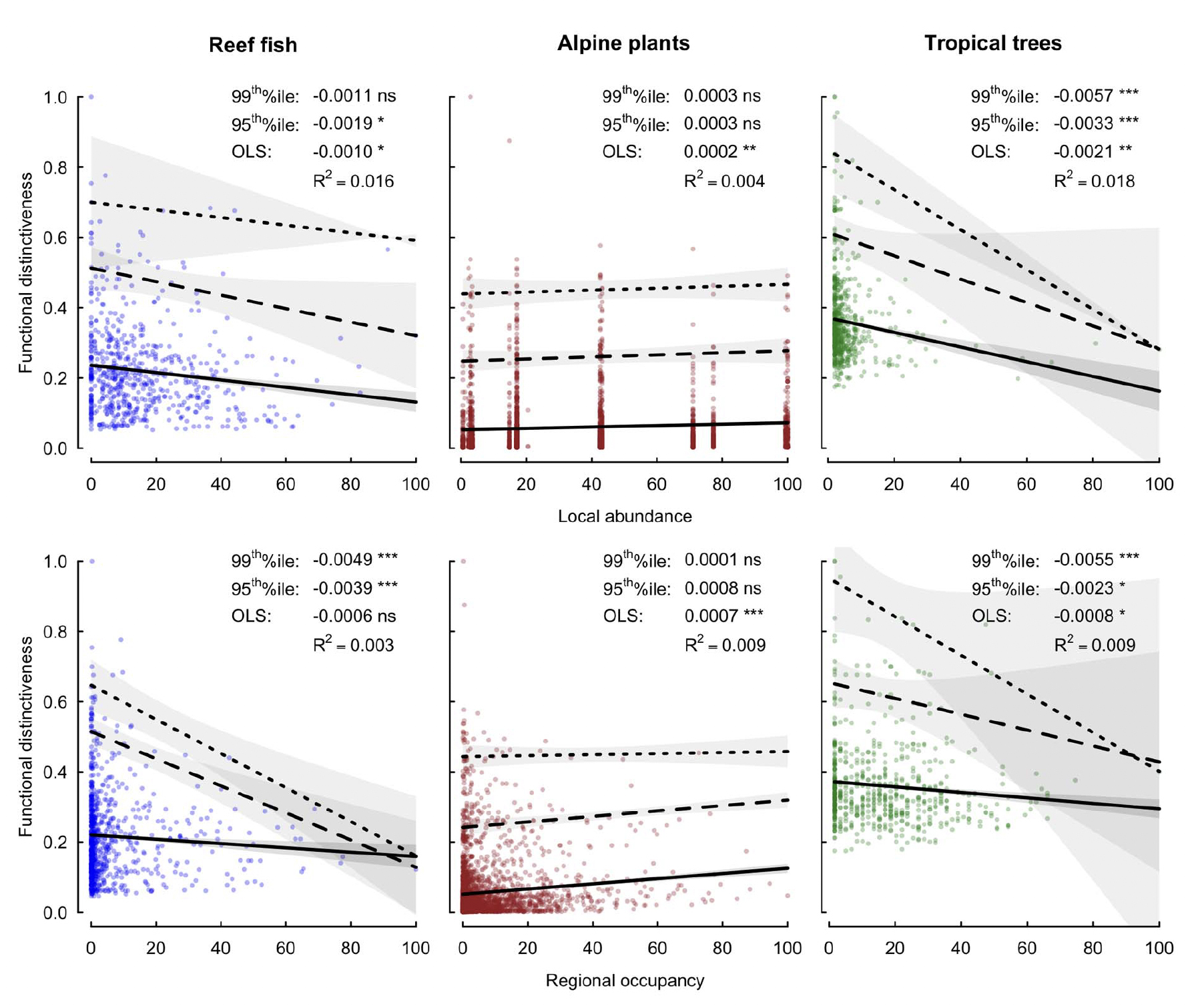
Using datasets on species occurrences and traits from coral reef fishes (846 species), alpine plants (2,979 species), and tropical trees (662 species), we show that the most distinct trait combinations are mainly supported by species that are locally and regionally rare. Species with low functional redundancy, likely supporting the most vulnerable ecosystem functions, were rarer than expected by chance in all ecosystems. For example, 63% and 98% of vulnerable-function fish species were locally and regionally rare, respectively, while 47% of fish species and 55% of tropical tree species supporting highly vulnerable functions averaged only one individual per sample.
Our results emphasize the importance of rare species conservation, even in highly diverse ecosystems, which are thought to exhibit high functional redundancy. Rare species offer more than aesthetic, cultural, or taxonomic diversity value; they disproportionately increase the potential breadth of functions provided by ecosystems across spatial scales. As such, they are likely to insure against future uncertainty arising from climate change and the ever-increasing anthropogenic pressures on ecosystems. Our results call for a more detailed understanding of the role of rarity and functional vulnerability in ecosystem functioning.