Evolving Species Diversity
Livingston G., Matias W.M., Calcagno C., Barbera C., Combe M., Leibold M. and Mouquet N. (2012). Competition colonization dynamics in experimental bacterial metacommunities. Nature Communication, 3, 1234, doi:10.1038/ncomms2239
Venail P., Kaltz O., Olivieri I., Pommier T., Mouquet N. (2011). Diversification in temporally heterogeneous environments: effect of the grain in experimental bacterial populations. Journal of Evolutionary Biology, doi.org/10.1111/j.1420-9101.2011.02376.x
Venail P., MacLean R.C., Bouvier T., Brockhurst M.A., Hochberg M., Mouquet N. (2008). Diversity and productivity peak at intermediate dispersal rate in evolving metacommunities. Nature, doi.org/10.1038/nature06554
Evolving the Biodiversity Ecosystem Functioning Relationship
Jousset A., Eisenhauer N., Merker M., Mouquet N., Scheu S. (2016). High functional diversity stimulates diversification in experimental microbial communities. Science Advances, doi.org/10.1126/sciadv.1600124
Matias M.G., Combe M., Barbera C., Mouquet N. (2013). Ecological strategies shape the insurance potential of biodiversity. Frontiers in Microbiology, doi.org/10.3389/fmicb.2012.00432
Gravel D.*, Bell T., Barbera C., Combe M., Pommier T., Mouquet N.* (2012). Phylogenetic constraints on ecosystem functioning. Nature Communications, doi.org/10.1038/ncomms2123 (* These authors contributed equally to this study)
Gravel D., Bell T., Barbera C., Bouvier T., Pommier T., Venail P., Mouquet N. (2010). Experimental niche evolution alters the strength of the diversity-productivity relationship. Nature, doi.org/10.1038/nature09592
Venail P., MacLean R.C., Meynard C.N., Mouquet N. (2010). Dispersal scales up the biodiversity-productivity relationship in an experimental source-sink metacommunity. Proceedings of the Royal Society B Biological Sciences, doi.org/10.1098/rspb.2009.2104
Specialization and Traits Selection
Rain Franco A., Mouquet N., C. Gougat Barbera, T. Bouvier, S. Beier (2021). Niche breadth affects bacterial transcription patterns along a salinity gradient. Molecular Ecology, doi:10.1111/mec.16316
Gounand I., Daufresne T., Gravel D., Bouvier C., Bouvier T., Combe M., Gougat-Barbera C., Poly F., Torres-Barcelo C., Mouquet N. (2016). Size evolution in microorganisms masks trade-offs predicted by the growth rate hypothesis. Proceedings of the Royal Society B Biological Sciences, doi.org/10.1098/rspb.2016.2272
Gray S.M., Poisot T., Harvey E., Mouquet N., Miller T.E., Gravel D. (2015). Temperature and trophic structure are driving microbial productivity along a biogeographical gradient. Ecography, doi.org/10.1111/ecog.01748
Gounand I., Kefi S., Mouquet N., Gravel D. (2016). Trait selection during food web assembly: the roles of interactions and temperature. Theoretical Ecology, doi.org/10.1007/s12080-016-0299-7
Kadowaki K., Barbera C., Godsoe W., Delsuc F., Mouquet N. (2016). Predicting biotic interactions and their variability in a changing environment. Biology Letters, doi.org/10.1098/rsbl.2015.1073
Explore topic pages
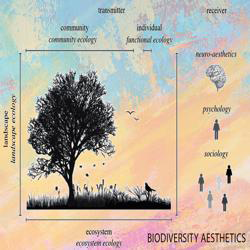 Aesthetics Value of Biodiversity
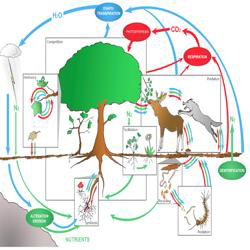 Biodiversity & Ecosystem Functioning
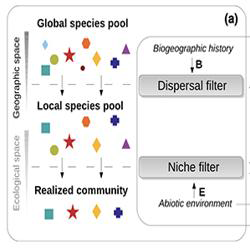 Biogeography, Macroecology & Ecophylogenetics
 Experimental Evolution
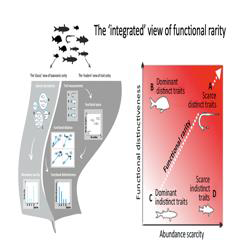 Functional Biogeography
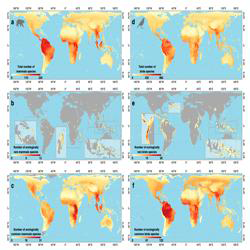 Functional Rarity
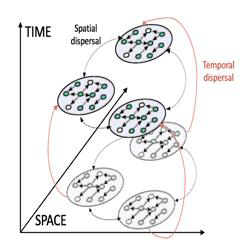 Metacommunities
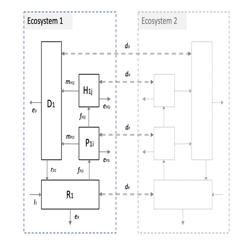 Metaecosystems
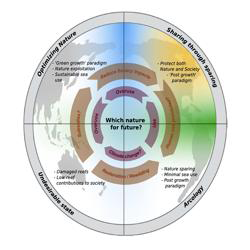 Nature for Future
 Reviews and Synthesis
 Trophic Biogeography & Metaweb
 Biodiful
 Outreach
 Collaborators