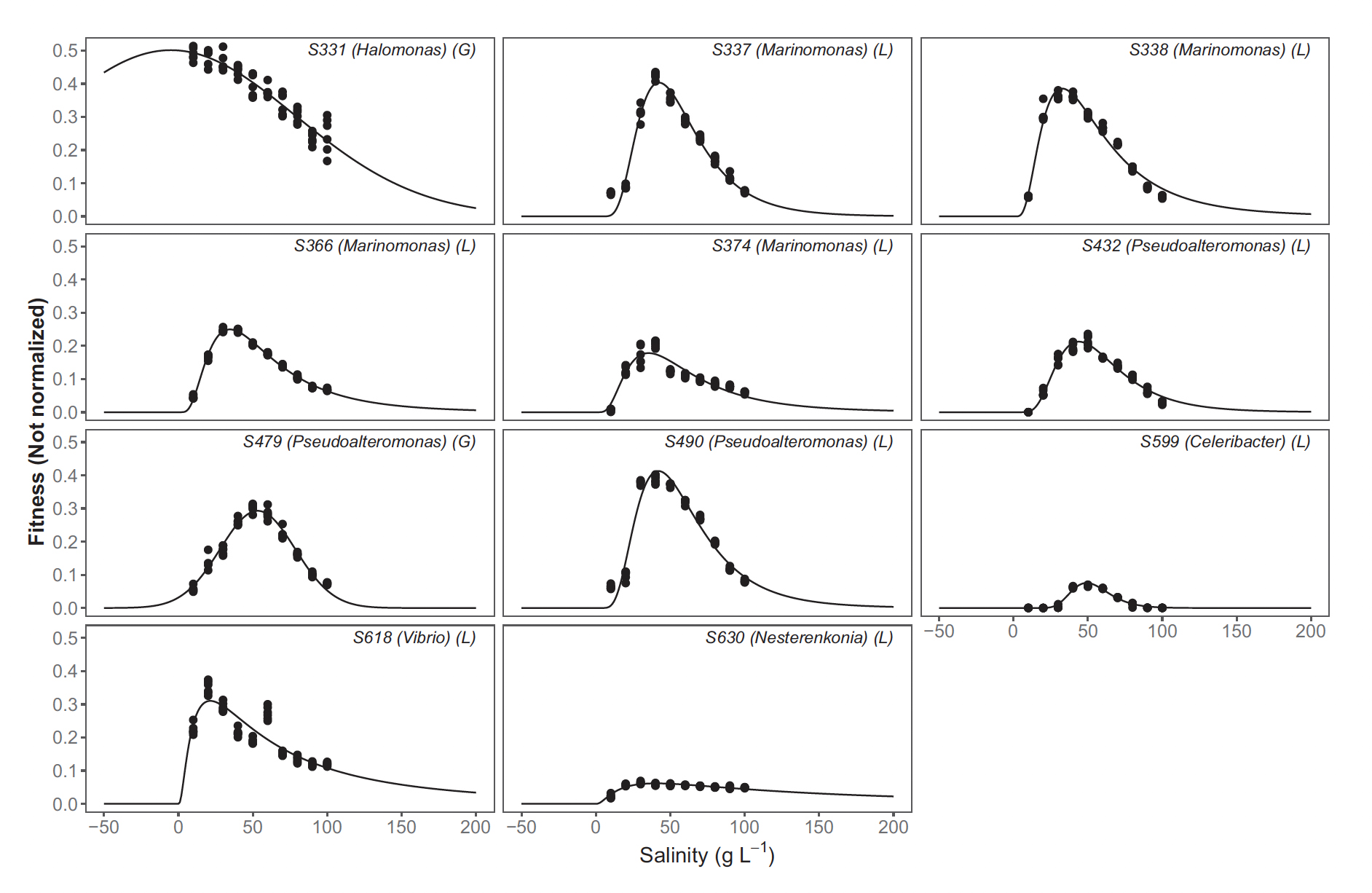
Understanding the molecular mechanisms shaping species life history is key to predicting responses to environmental change. Specialists with narrow niche breadth maximize fitness in optimal habitats, whereas generalists adapt to a wider range of conditions.
This study aimed to identify transcriptional patterns distinguishing bacterial strains with contrasting niche breadths along a salinity gradient. We hypothesized that specialists show stronger regulation of fitness-related genes due to greater sensitivity to environmental change, while generalists exhibit enhanced regulation of genes protecting against cellular damage.
To test this, we analyzed transcriptional regulation of fitness- and adaptation-related genes in 11 bacterial strains under varying salinity. Results showed that gene regulation levels correlate with niche breadth and stress exposure, and we identified candidate stress marker genes to help monitor susceptibility to environmental change.