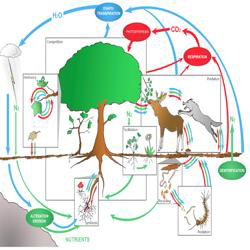
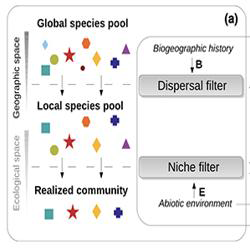
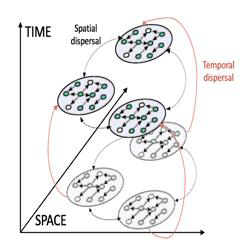
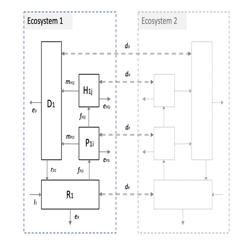
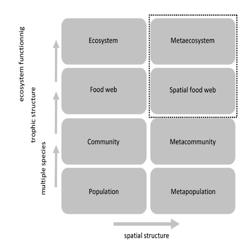
I am primarily a theoretical community ecologist, with complementary experience in biodiversity, ecosystem functioning and evolution. Early in my career, I developed among the first models of metacommunities, showing how dispersal among local communities shapes diversity at local and regional scales. These models contributed to the formalisation of metacommunity theory. I extended this approach by integrating metaecosystem dynamics and eco-evolutionary processes, combining theoretical models with experimental microbial systems, and worked on trophic biogeography and ecophylogenetics to understand how coexistence mechanisms, spatial dynamics and evolutionary history structure biodiversity.
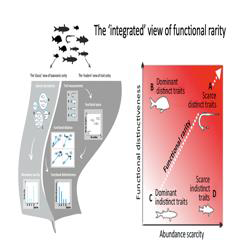
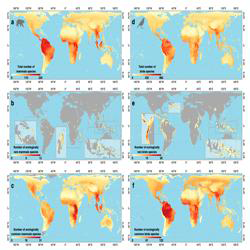
My research has progressively scaled up towards macroecology and biogeography, with the objective of mapping the multiple facets of biodiversity (taxonomic, functional and phylogenetic) and understanding how environmental, historical and anthropogenic factors generate observed biogeographic patterns. Within the framework of functional biogeography I studied how ecological functions are distributed across regions and ecosystems, identifying patterns of functional diversity, redundancy and vulnerability under global change. A central thread of this work is the concept of functional rarity, which identifies species that are both ecologically rare and functionally distinct, and therefore likely to play disproportionate roles in ecosystem functioning and conservation. These studies cover both marine (tropical coral reefs & mediterranean coralligenous) and terrestrial ecosystems (birds, mammals, and plants).
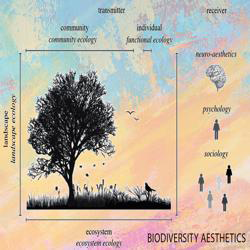
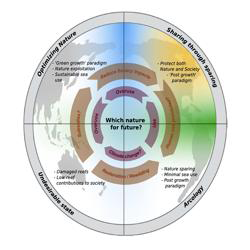
I am now working within the broader framework of Nature’s Contributions to People and the Nature Futures Framework (IPBES), to integrate the ecological sciences with the social and cultural dimensions of biodiversity. In particular, I develop a quantitative measure of biodiversity aesthetic, combining online participatory surveys (Biodiful), image analysis and deep learning to quantify the aesthetic value of species and communities at the local and biogeographic scales. I am increasingly interested in how our representations of nature shape the ways we relate to, and protect biodiversity.
Along the way, I have contributed to several reviews and conceptual syntheses and curate the Global Ecology feed on Bluesky (see also the online digest).
I am fortunate to work with incredible students, postdocs, collaborators and colleagues, many of whom have taught me more than I could ever hope to learn.