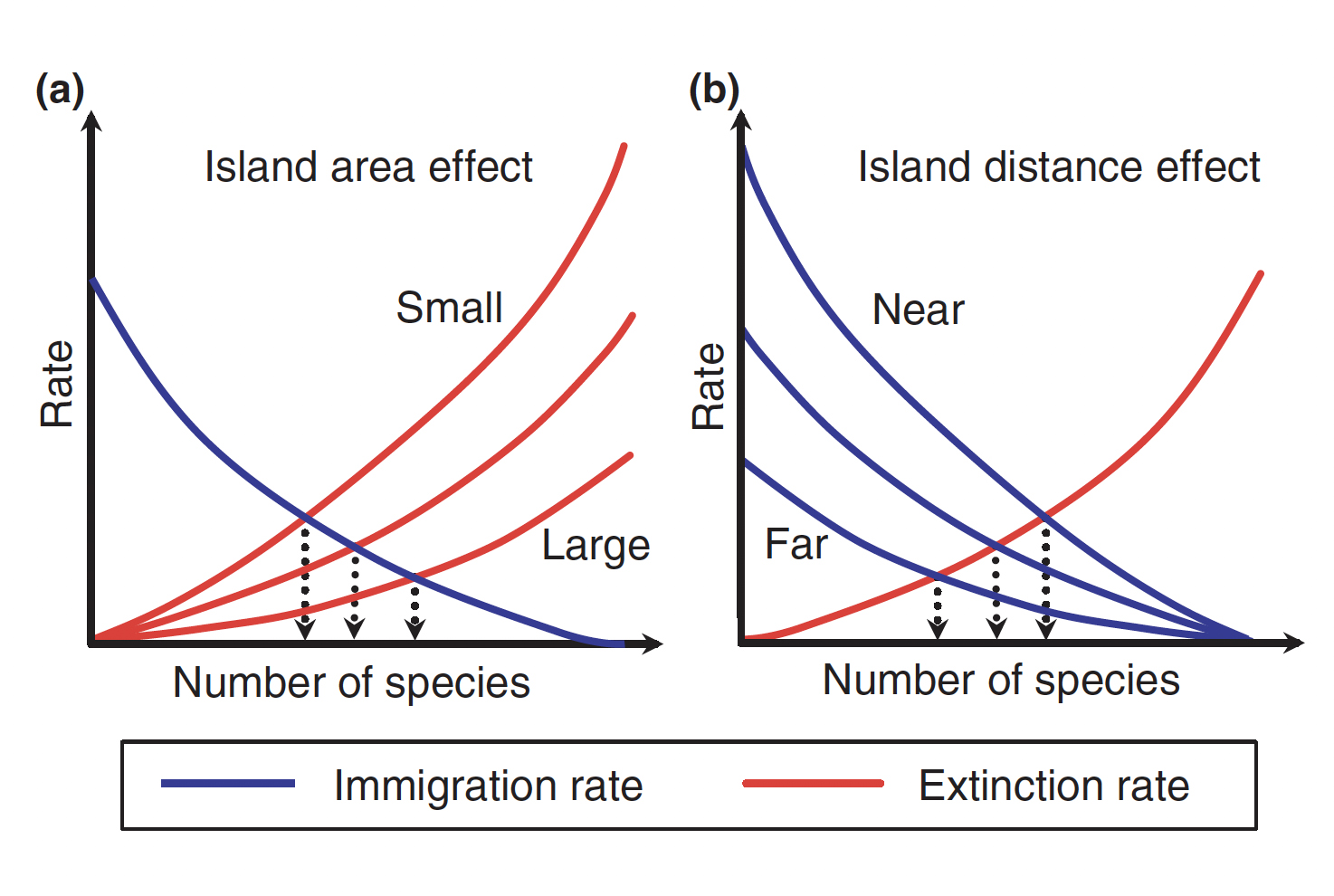
Here, building on the developments of island biogeography proposed 50 years ago by MacArthur and Wilson (1963), we highlight prospects for research on islands to improve our understanding of the ecology and evolution of communities in general. Throughout, we emphasise how attributes of islands combine to provide unusual research opportunities, the implications of which stretch far beyond islands.
Molecular tools and increasing data acquisition now permit reassessment of some fundamental issues that interested MacArthur and Wilson. These include the formation of ecological networks, species abundance distributions, and the contribution of evolution to community assembly.
We also extend our prospects to other fields of ecology and evolution, understanding ecosystem functioning, speciation and diversification, frequently employing assets of oceanic islands in inferring the geographic area within which evolution has occurred, and potential barriers to gene flow. Although island-based theory is continually being enriched, incorporating non-equilibrium dynamics is identified as a major challenge for the future.