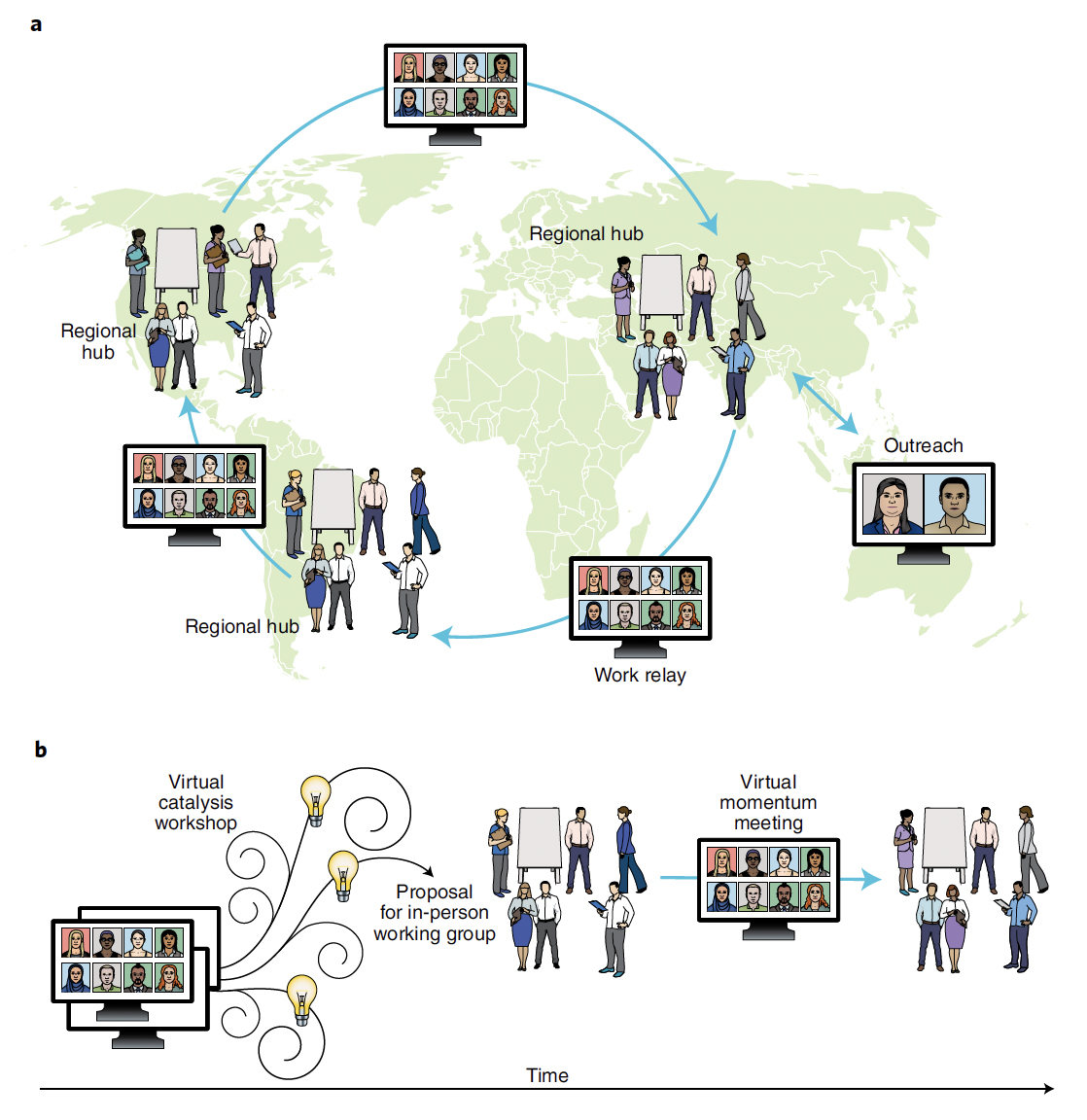
Scientific progress, especially in environmental sciences, has traditionally thrived on collaborative working groups that synthesize diverse data and ideas into new models. These working groups are often facilitated by synthesis centres, institutions that foster collaborative research. Due to the COVID-19 pandemic, these centres had to pivot to virtual meetings, which, although useful as a temporary solution, have limitations, especially in fostering creative breakthroughs.
In-person sessions are more immersive and allow for continuous, intensive discussions, while virtual sessions can lead to fatigue and distraction. As the world transitions back to in-person interactions, a hybrid model combining the best of both in-person and virtual collaborations is proposed.
Such a model would employ virtual collaborations for brainstorming and outreach, especially to those unable to travel, and in-person sessions for detailed work. While the core activities of working groups are best suited for face-to-face meetings, complementary virtual meetings can keep momentum and ensure inclusiveness. As the world becomes more comfortable with virtual interactions, synthesis centres need to invest in hybrid models to maximize impact and relevance.