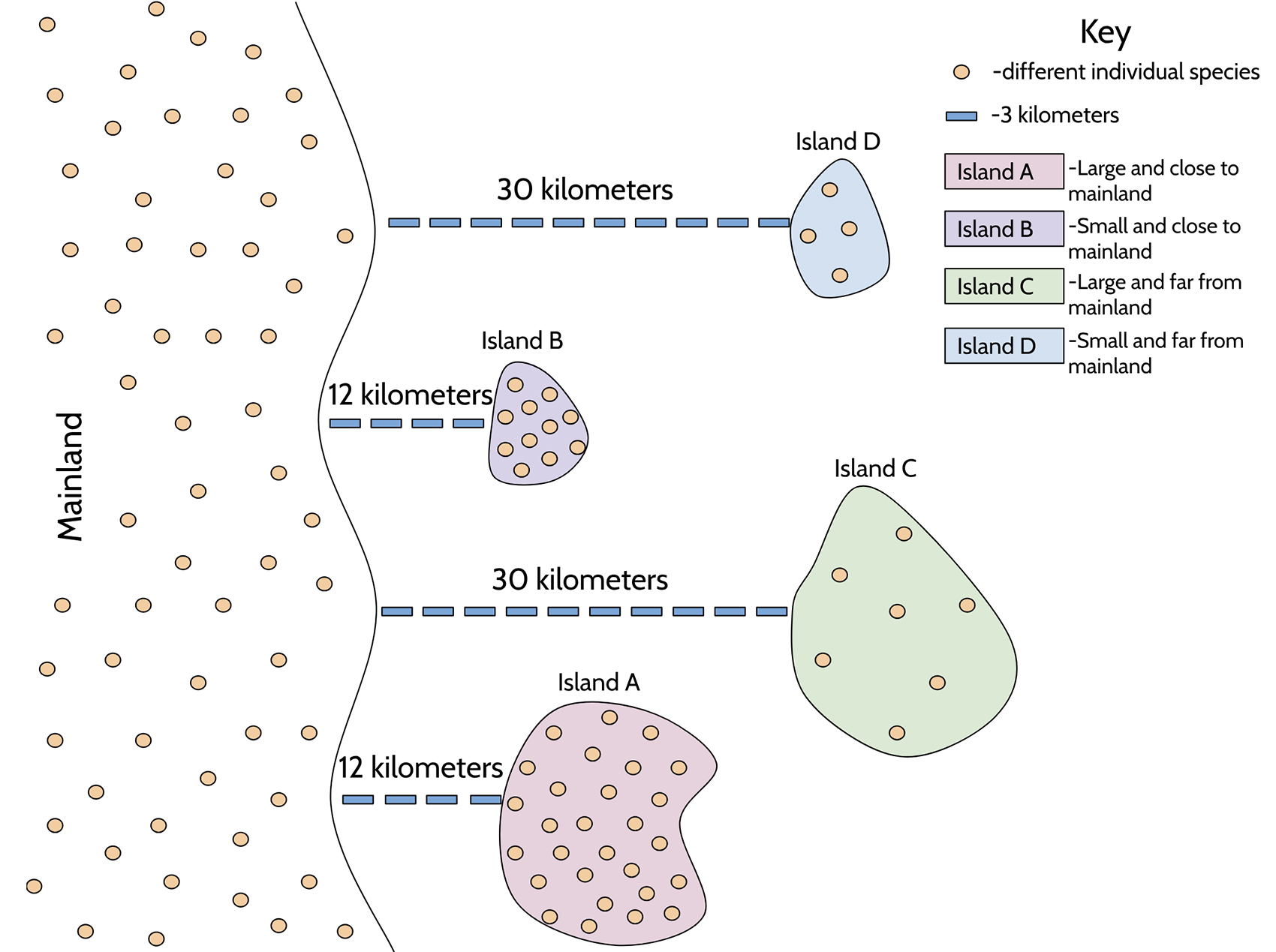
The 50th anniversary of the theory of island biogeography (IBT) has renewed interest in island biology, highlighting the often overlooked breadth of its influence in modern ecology.
Here, we summarize key links between IBT and subsequent developments, including extensions of the original model to incorporate greater biological complexity and its role in inspiring other major frameworks such as metapopulation theory and ecological neutral theory.
Using examples like habitat fragmentation and life-history evolution, we argue that a major legacy of IBT lies in shaping and unifying ecological thinking.