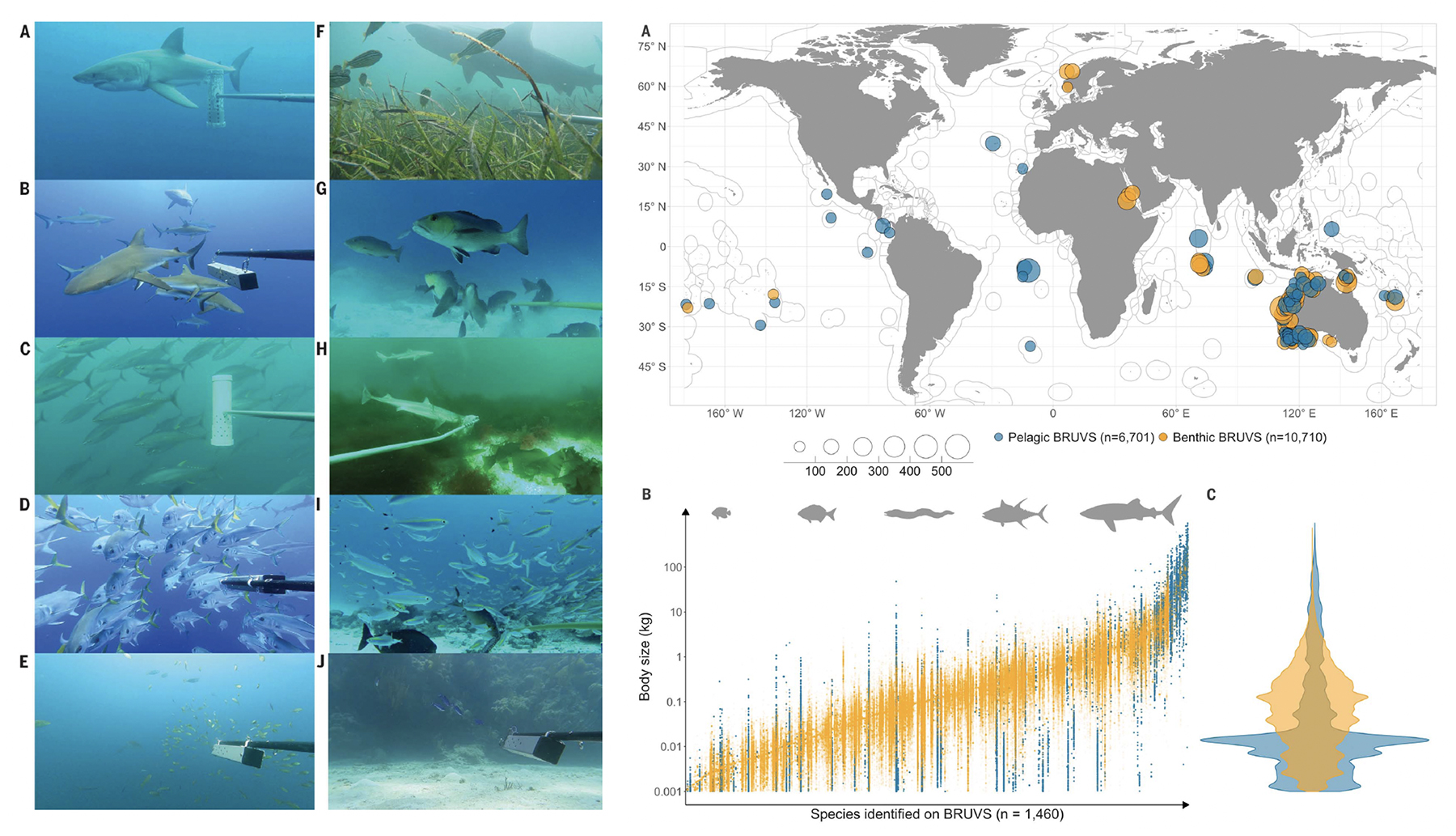
Animal body-size variation influences multiple processes in marine ecosystems, but habitat heterogeneity has prevented a comprehensive assessment of size across pelagic (midwater) and benthic (seabed) systems along anthropic gradients. In this work, we derive fish size indicators from 17,411 stereo baited-video deployments to test for differences between pelagic and benthic responses to remoteness from human pressures and effectiveness of marine protected areas (MPAs).
From records of 823,849 individual fish, we report divergent responses between systems, with pelagic size structure more profoundly eroded near human markets than benthic size structure, signifying greater vulnerability of pelagic systems to human pressure.
Effective protection of benthic size structure can be achieved through MPAs placed near markets, thereby contributing to benthic habitat restoration and the recovery of associated fishes. By contrast, recovery of the worlds largest and most endangered fishes in pelagic systems requires the creation of highly protected areas in remote locations, including on the High Seas, where protection efforts lag.