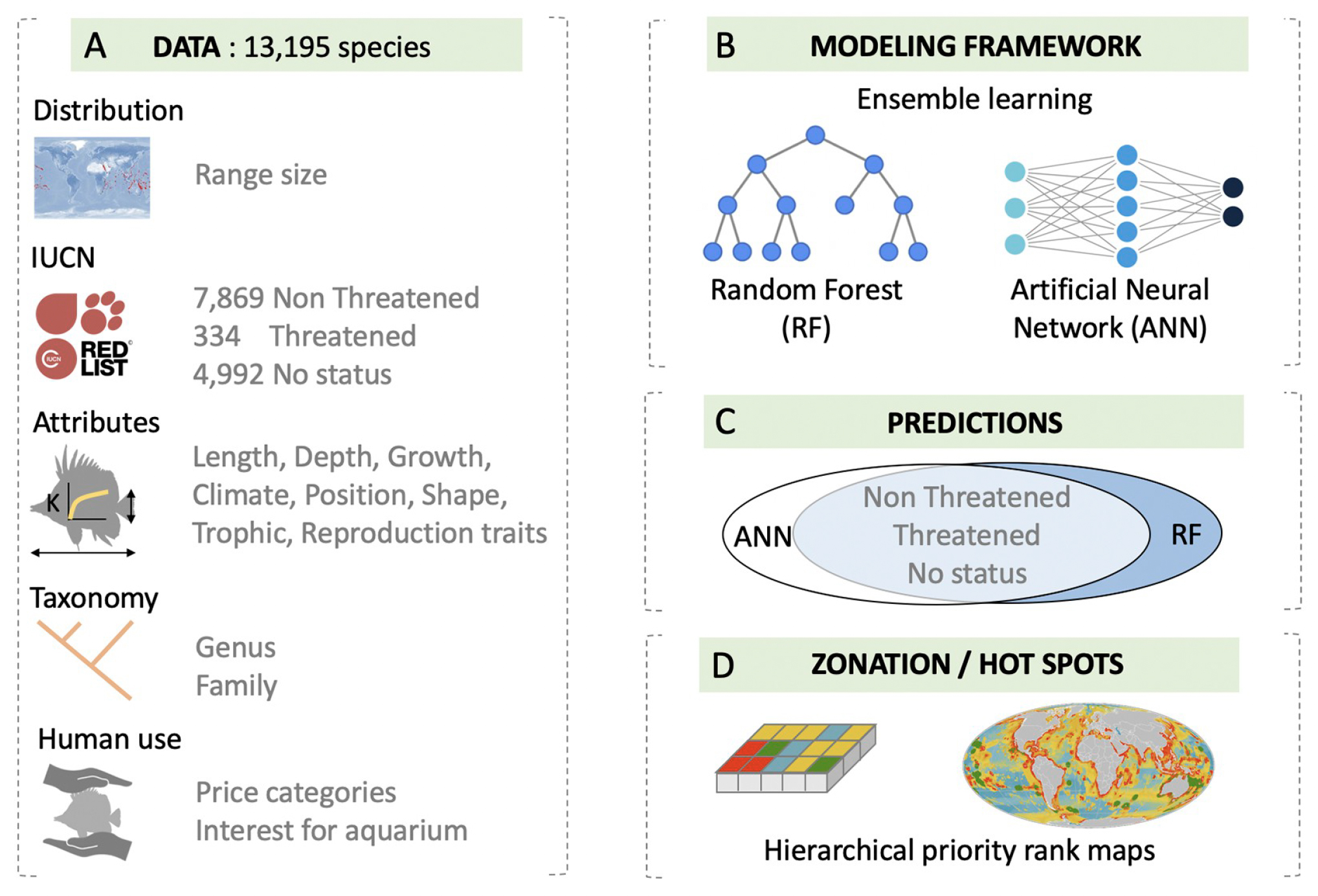
We predicted the IUCN status of marine fishes based on two machine learning algorithms, trained with available species occurrences, biological traits, taxonomy, and human uses. We found that extinction risk for marine fish species is higher than initially estimated by the IUCN, increasing from 2.5% to 12.7%.
Threatened species peaked mainly in the South China Sea, the Philippine Sea, the Celebes Sea, the west coast Australia and North America. We also explored the consequences of including these predicted species' IUCN status in the prioritization of marine protected areas through conservation planning.
We found a marked increase in prioritization ranks for subpolar and polar regions despite their low species richness. We suggest to integrate multifactorial ensemble learning to assess species extinction risk and offer a more complete view of endangered taxonomic groups to ultimately reach global conservation targets like the extending coverage of protected areas where species are the most vulnerable.