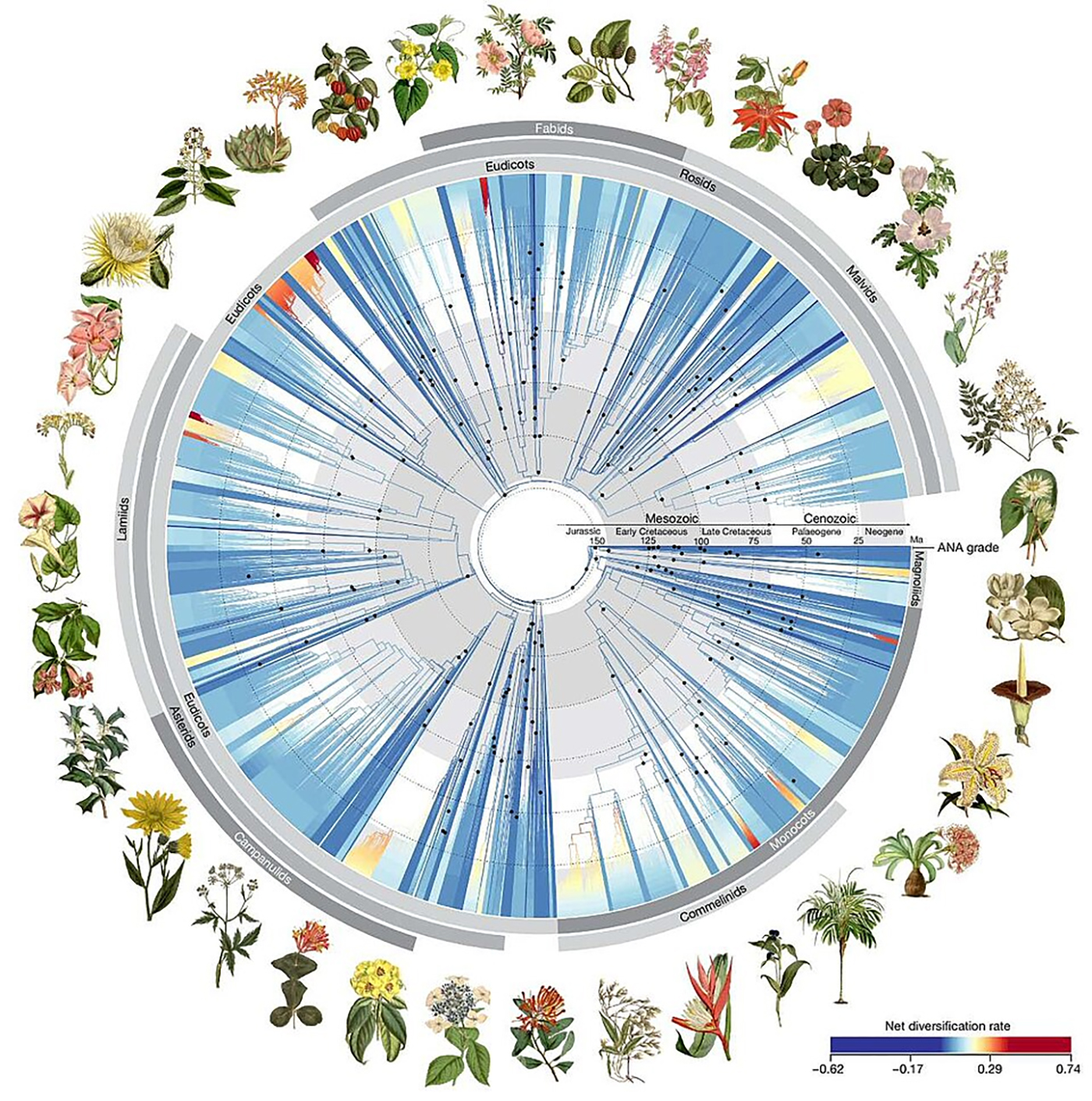
Phylogenetic approaches are increasingly recognized as valuable tools for biodiversity conservation because they incorporate information on the evolutionary relationships among species and thus capture dimensions of biodiversity overlooked by species richness alone. This meeting report synthesizes the main insights from a symposium on the role of phylogenies in conservation biology.
The discussions highlighted how phylogenetic diversity can influence ecosystem productivity and stability, improve understanding of the impacts of global change on the tree of life, and inform conservation planning by identifying evolutionarily distinct lineages and regions of high evolutionary potential.
The report also emphasized important mismatches among taxonomic, phylogenetic, and functional diversity patterns, suggesting that conservation strategies based solely on species richness may fail to preserve key evolutionary and functional components of biodiversity. While several promising methods and macroevolutionary frameworks are emerging, the authors stress that further empirical tests and more practical recommendations are needed before phylogenetic diversity can be fully integrated into applied conservation policy and management.