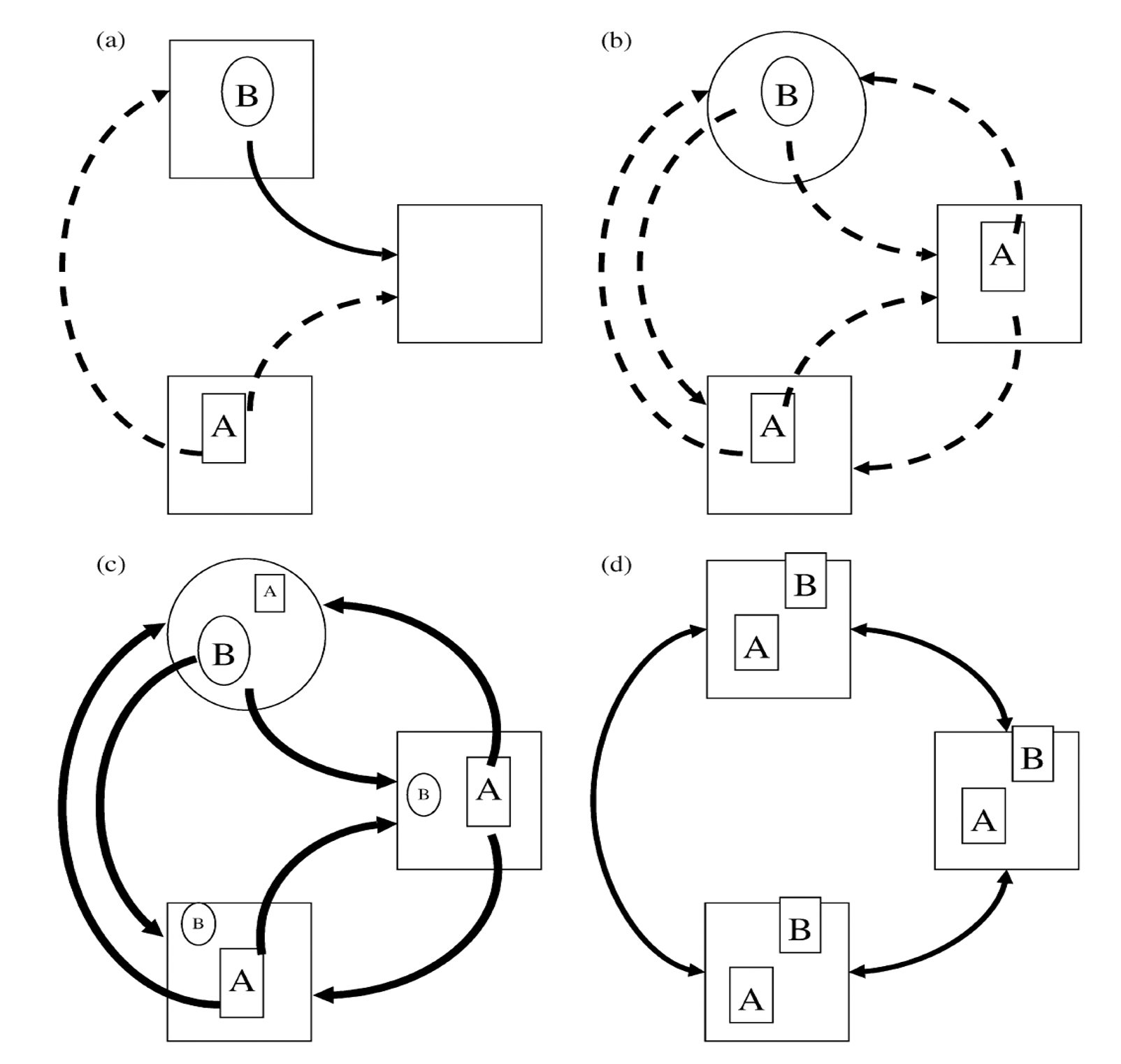
The metacommunity concept is an important framework for understanding linkages between different spatial scales in ecology. This review examines current knowledge of the concept, beginning with its definition as a set of local communities connected through the dispersal of multiple potentially interacting species.
The authors identify four main paradigms of metacommunities-the patch-dynamic view, the species-sorting view, the mass effects view, and the neutral view-each emphasizing different ecological processes that may shape metacommunity dynamics. These paradigms have distinct intellectual origins, and the review discusses possibilities for their future integration.
Using this framework, the paper explains how the metacommunity concept helps refine existing ecological theory and demonstrates its value through both theoretical and empirical examples. As ecologists increasingly seek to understand complex mechanisms across multiple spatial and temporal scales, the metacommunity perspective offers important insights that often differ from those obtained through traditional approaches focused solely on local communities.