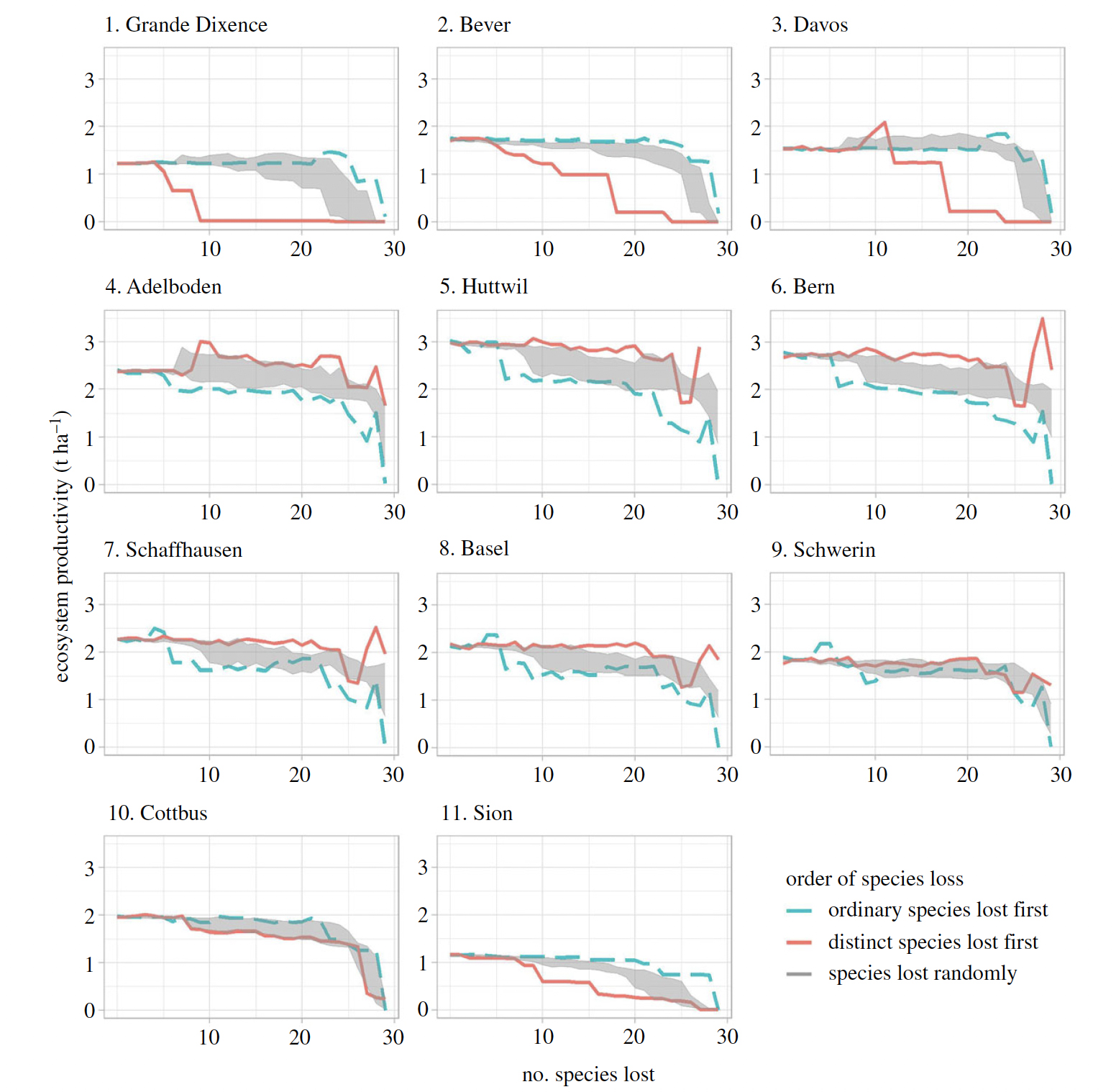
To investigate how distinct species affect ecosystem productivity, we used a forest-gap model to simulate realistic temperate forest successions along an environmental gradient and measured ecosystem productivity at the end of the successional trajectories. We used different sets and numbers of species, bearing either distinct or indistinct functional traits, and compared them to random assemblages.
Long-term ecosystem productivity dropped when distinct species were lost first from the regional pool of species, under the harshest environmental conditions.
On the contrary, productivity was more dependent on ordinary species in milder environments. Our findings show that species functional distinctiveness, integrating multiple trait dimensions, can capture species-specific effects on ecosystem productivity.