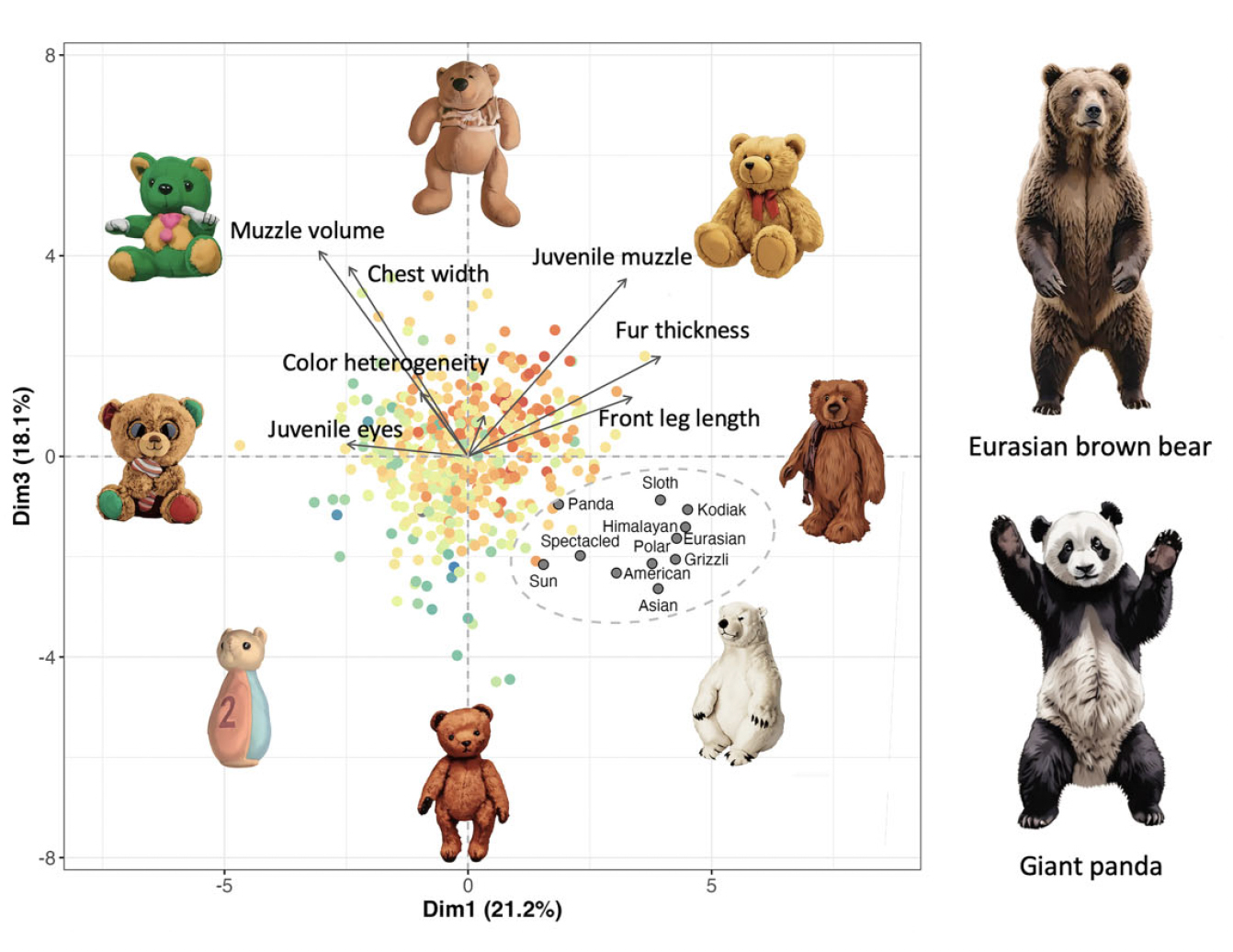
We compared the morphological and colorimetric characteristics of the teddy bears evaluated previously (Blanc et al. 2025) with those of real bears. Our results show that teddy bears conform to universal aesthetic standards: disproportionately large heads, prominent eyes, rounded silhouettes, uniform fur, and neutral colors, all of which make them immediately appealing.
However, these traits do not resemble those of wild bears. Our analyses reveal that real bears are far from the idealized image of the most cute teddy bears: even the panda, despite having become a global icon, remains distant from the representations conveyed by teddy bears.
These differences highlight a profound gap between among our first emotional experience of nature and its biological reality. The teddy bear is a mirror of our relationship with nature: it embodies both the tenderness of our emotional connection and our distance from the real world. This idealized vision may seem harmless, but it raises an important question: If our representations of living things are built from overly caricatured symbols, do we risk losing our ability to perceive and protect the complexity of the natural world?