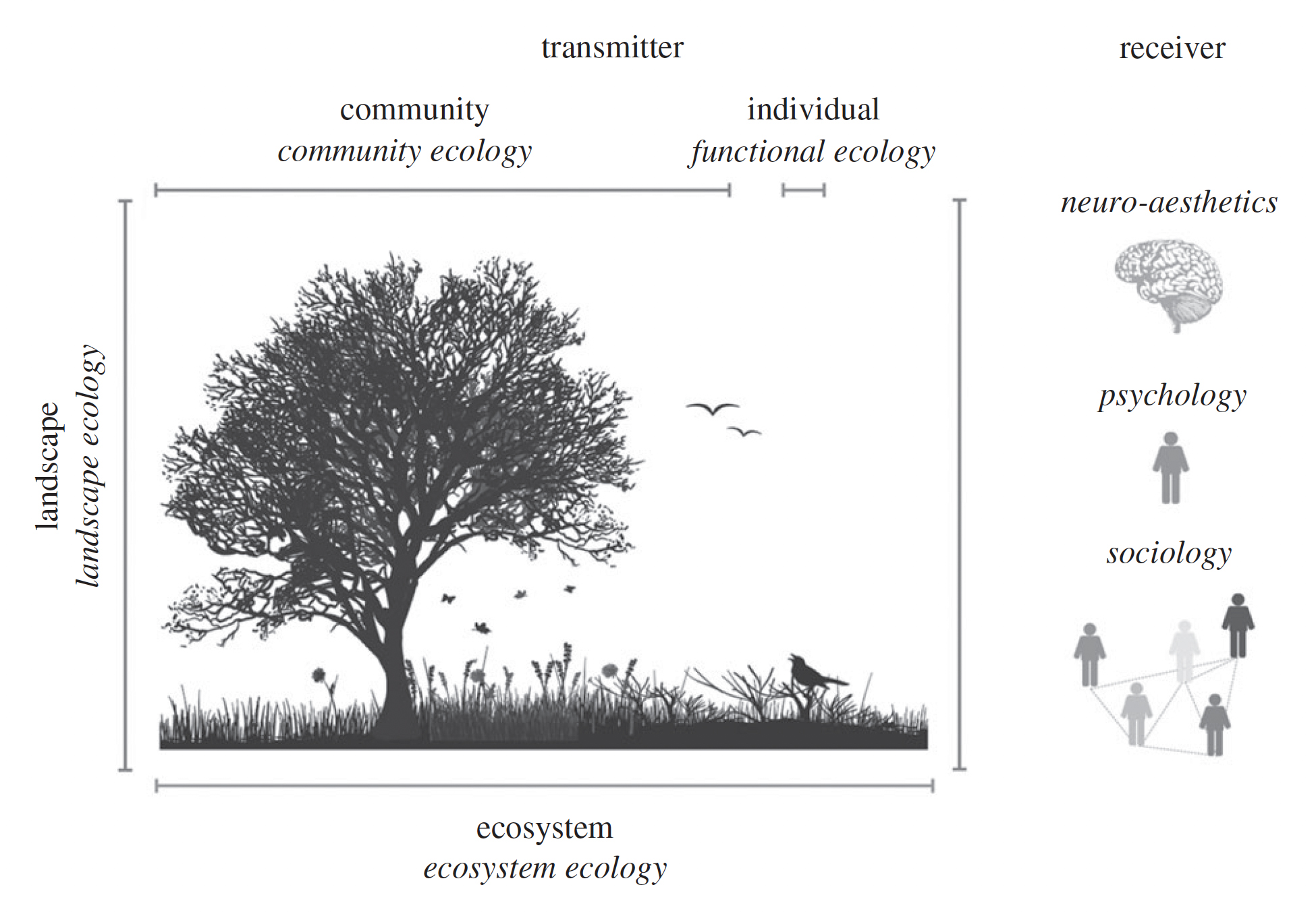
As a cultural ecosystem service, the aesthetic value of landscapes contributes to human well-being, but studies linking biodiversity and ecosystem services generally do not account for this particular service. Therefore, congruence between the aesthetic perception of landscapes, ecological value and biodiversity remains poorly understood.
Here, we describe the conceptual background, current methodologies and future challenges of assessing landscape aesthetics and its relationship with biodiversity. We highlight the methodological gaps between the assessment of landscape aesthetics, ecological diversity and functioning. We discuss the challenges associated with connecting landscape aesthetics with ecological value, and the scaling issues in the assessment of human aesthetics perception.
To better integrate aesthetic value and ecological components of biodiversity, we propose to combine the study of aesthetics and the understanding of ecological function at both the species and landscape levels. Given the urgent need to engage society in conservation efforts, this approach, based on the combination of the aesthetic experience and the recognition of ecological functioning by the general public, will help change our culture of nature and promote ecologically oriented conservation policies.